 Pay Online

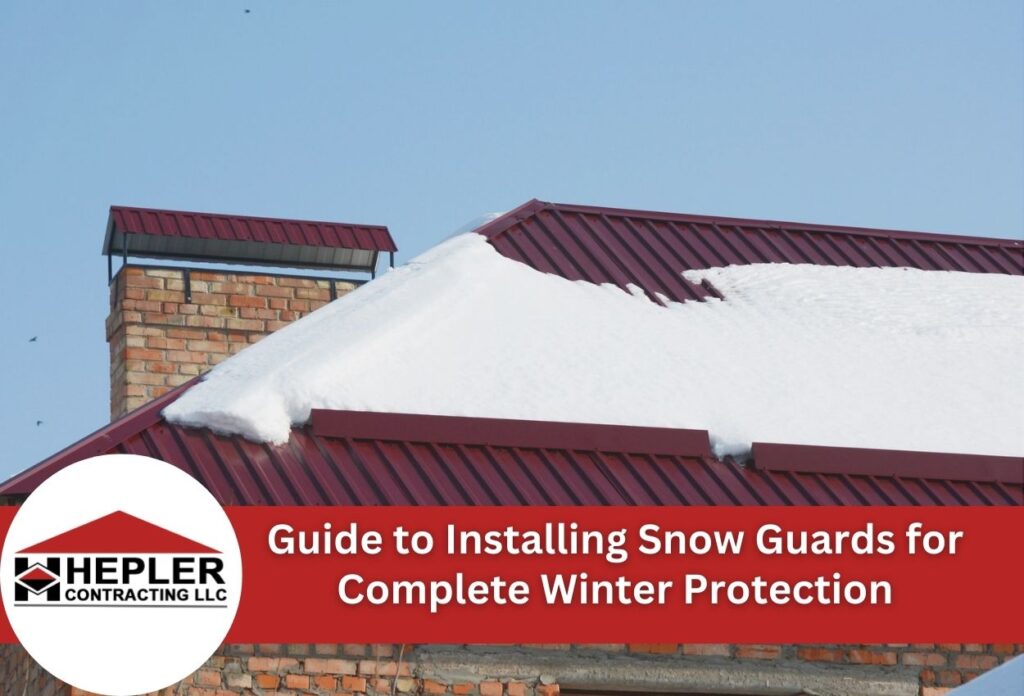
Winter weather brings serious safety hazards when accumulated snow suddenly falls from rooftops in dangerous avalanche-style slides. This uncontrolled snow poses significant risks to people walking below, damages landscaping, destroys gutters, and can cause expensive property damage. Installing snow guards provides essential protection by controlling how snow releases from roof surfaces throughout the winter.
The snow guard installation process involves strategically placing retention devices across roof planes to hold snow accumulation in place until it naturally melts or releases gradually in smaller, manageable amounts. Rather than allowing snow to build up and slide off suddenly, properly installed roof snow retention systems break up the piles into controlled releases that protect both property and people below.
Metal roof snow guards are one of the most effective solutions for preventing snow avalanches from roofs. Different snow guard types and materials offer varying levels of protection depending on roof pitch, expected snowfall, and specific roofing materials. Understanding how these systems function helps property owners protect their buildings and surrounding landscaping during the harsh Pennsylvania winters.
Types of Snow Guards for Different Roofing Systems
The best snow guard types and materials depend heavily on specific roofing systems and local climate conditions. Polycarbonate snow guards offer excellent durability and weather resistance while remaining cost-effective for residential applications. These lightweight options work particularly well on asphalt shingle roofs and provide reliable snow retention without adding excessive weight to roof structures.
Aluminum snow guards deliver superior strength and corrosion resistance, making them ideal for metal roofs. Their lightweight properties and ability to match various roof colors make aluminum an excellent choice for both residential and commercial installations. Stainless steel options provide maximum durability for harsh weather environments and heavy snow load areas, though they typically require professional installation due to their more complicated mounting requirements.
Along with materials, there are multiple styles of snow guards, each with benefits depending on the roof design and average snowfall.
- Pad-style snow guards attach directly to roof surfaces and work best on lower-pitched roofs with moderate snow loads.
- Rail-style systems create continuous barriers across roof sections, providing excellent retention for steeper pitches and heavier accumulations.
- Fence-style designs offer maximum snow holding capacity and are effective on roofs with extreme pitch angles or areas experiencing substantial snowfall.
The snow guard installation process must account for roof pitch measurements, expected snow accumulation, and material compatibility to ensure reliable performance throughout the winter.
Preparing Your Roof and Planning the Snow Guard Layout
A roof assessment is the first step in successful snow guard installation. Begin by examining the roof for areas requiring reinforcement or repair before installing snow guards. Check for loose shingles, damaged flashing, or compromised roof sections that could fail under additional stress from snow retention systems. Document any existing damage and address structural issues to ensure the roof can safely support both snow and the retention hardware.
Identifying the best place for the guards requires evaluating roof geometry and snow accumulation patterns. Focus on areas where snow typically builds up heaviest, particularly near roof edges, valleys, and areas above entrances or walkways. Snow guards perform best when positioned in the lower third of the roof, where sliding snow gains the most momentum. Mark potential installation points while considering obstacles like vents, chimneys, or satellite equipment that could interfere with placement.
Calculating proper spacing and quantity requirements depends on roof pitch, dimensions, and regional snowfall patterns. Steeper roofs generally require closer spacing between retention devices, while lower-pitched roofs may accommodate wider spacing. Create a detailed installation pattern that accounts for roof seams, structural members, and aesthetic considerations. This strategic planning ensures that roof snow retention systems provide adequate coverage while preventing snow avalanches from roofs.
Step-by-Step Snow Guard Installation Process for Metal Roofs
Mechanically fastened snow guards require precise installation techniques to create weatherproof connections on metal roofing surfaces. Begin by marking installation points according to the planned layout and verifying that it aligns with the underlying roof structure. Use drill bits designed specifically for metal roofing materials to create clean pilot holes that match fastener specifications. Proper drilling technique prevents material damage and creates secure attachment points for the roof snow retention systems.
Apply high-quality roofing sealant around each pilot hole before inserting fasteners to create watertight seals. Thread fasteners through snow guard mounting brackets and into pre-drilled holes, tightening to manufacturer specifications without over-torquing, which could distort metal panels. Apply additional sealant over fastener heads and around bracket edges to complete weatherproof connections that withstand thermal expansion and contraction cycles common with metal roof snow guards.
Adhesive-mounted systems need thorough surface preparation to achieve maximum holding strength. Clean installation areas completely using degreasing agents to remove dirt, oil, and oxidation that could compromise adhesive bonds. Allow surfaces to dry completely before proceeding with the adhesive. Apply structural adhesive according to the package instructions, ensuring full coverage across mounting surfaces while avoiding excess that could squeeze out during installation.
Position snow guards firmly into adhesive beds and maintain consistent pressure during initial curing periods. Most adhesive systems require 24 to 48 hours of undisturbed curing time before the snow guards reach full strength, making weather timing critical for successful installations.
Snow Guard Installation Techniques for Shingle and Tile Roofs
Asphalt shingle roofs require specialized mounting approaches that maintain material integrity while creating secure attachment points for roof snow retention systems. Similar to metal roofs, the installation process begins with identifying placement areas that align with underlying rafters or structural members. Snow guards perform best when positioned over solid backing rather than unsupported shingle areas that could tear under snow loading pressure.
Snow guards on asphalt shingle roofs are installed following similar steps to those of metal roofs. Depending on the type of snow retention system, the guards are either fastened through the roofing materials or adhered with sealant. After the snow guards are installed, apply roofing cement around edges and over fastener heads, creating additional waterproof barriers that protect against moisture penetration throughout the winter.
Clay tile and slate installations need extra care to preserve material integrity during mounting procedures. These brittle materials require specialized drilling techniques using masonry bits and low-speed settings to prevent cracking or chipping around attachment points. Pre-drill pilot holes slightly smaller than fastener diameter to ensure tight fits without creating stress fractures that could expand over time and compromise the snow guard’s effectiveness on these premium roofing materials.
Maintaining roof warranty compliance requires following the manufacturer’s specifications for installation methods. Many shingle warranties remain valid when snow guards attach through approved fastening techniques that include proper sealant application and flashing integration. Documenting the installation procedures and materials used can preserve warranty coverage while achieving effective roof protection.
Critical Installation Mistakes to Avoid and Quality Assurance
One of the most common installation errors that compromises snow guard effectiveness is improper spacing. Many installers place retention devices too far apart, creating gaps where snow accumulation can build sufficient momentum to override protection systems. Adequate spacing typically requires snow guards positioned every 12 to 24 inches on center, depending on roof pitch and snow load calculations. Installing devices with excessive spacing allows snow to gather force between retention points, leading to system failure when accumulated weight exceeds holding capacity.
Inadequate fastening techniques frequently result in premature failure of roof snow retention systems. Using incorrect fastener lengths, over-tightening hardware, or failing to hit structural members creates weak attachment points that cannot withstand the weight of accumulated snow. Metal roof snow guards require fasteners long enough to penetrate completely through roofing materials and into the roof decking. Insufficient depth allows fasteners to pull through roofing materials under stress, causing complete system failure.
Poor sealant application leads to water infiltration issues that compromise both roofing integrity and snow guard performance. Skipping sealant application around fastener heads or using inadequate amounts creates pathways for moisture penetration. Quality sealant application requires covering all fastener points completely while maintaining proper curing conditions. Temperature extremes and moisture exposure during curing periods prevent proper sealant adhesion, reducing their long-term effectiveness.
Post-installation inspections should verify fastener tightness, sealant coverage, and overall system alignment before winter weather arrives. Regular checks throughout the season can identify loose hardware or compromised sealant that requires attention to maintain roof protection.
Professional Installation vs DIY: Making the Right Safety Decision
Assessing personal safety factors is critical when deciding between professional installation and DIY approaches for installing snow guards. Roof height above two stories significantly increases fall risks and typically requires specialized safety equipment beyond what most homeowners possess. Steep roof pitches exceeding 6/12 create challenging working conditions that need professional-grade harness systems and extensive experience navigating sloped surfaces safely. Personal skill levels with roofing materials, power tools, and weather-resistant installation techniques directly impact both safety outcomes and system effectiveness.
Weather exposure during the snow guard installation process presents additional hazards that professionals manage through proper timing and safety protocols. Icy conditions, high winds, or wet surfaces create extremely dangerous working environments that require postponing DIY projects until conditions improve. Professional contractors have safety training and carry comprehensive insurance coverage that protects property owners from liability risks associated with installation accidents or injuries.
Professional installation has significant advantages beyond safety considerations for roof snow retention systems. Experienced contractors generally provide warranty coverage on both materials and workmanship, ensuring long-term protection for the investment. Professional teams utilize specialized equipment, including fasteners, commercial-grade sealants, and precision tools designed specifically for metal roof snow guards and various roofing materials. Their expertise in local building codes ensures installations meet regional snow load requirements and maintain compliance with municipality regulations.
Contractor knowledge of snow guard installation techniques includes understanding regional weather patterns, proper spacing calculations, and material selection for specific climate conditions. This professional expertise typically results in more effective installations that provide superior protection throughout the winter while preserving roofing system warranties.
Protect Your Home with Hepler Contracting LLC’s Expert Snow Guard Installation
Don’t let the harsh Pittsburgh winters compromise your roof’s integrity and your safety. Uncontrolled snow slides can cause significant damage and pose serious risks. Hepler Contracting LLC specializes in the professional installation of snow guards that are essential for maintaining the structural integrity and safety of your home during snowy months.
Whether you have a metal roof, shingle, or tile, our tailored snow guard solutions cater to all. We utilize top-grade materials to match your specific roofing needs and local climate conditions. Avoid the common pitfalls of DIY installations and ensure your snow guards are installed correctly and efficiently with Hepler Contracting LLC.
Ready to protect your property this winter? Call Hepler Contracting LLC at (412) 694-8785 to schedule a consultation and installation service. Ensure your roof is prepared to handle whatever winter throws its way.