 Pay Online

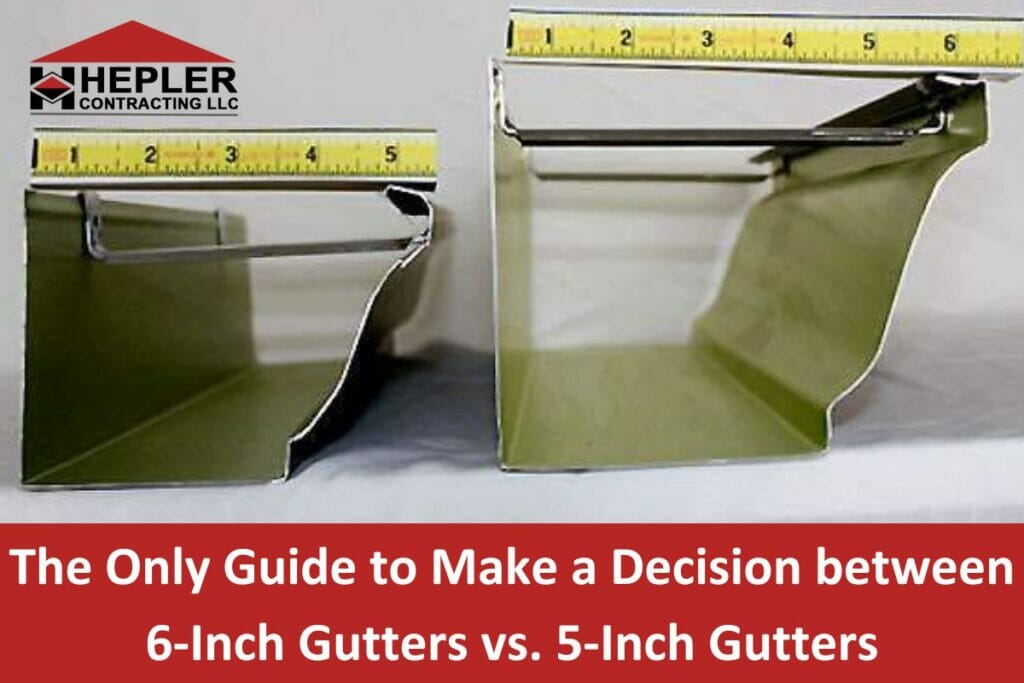
As a responsible homeowner, you understand the importance of gutters in safeguarding your home from water damage and maintaining its structural integrity. When it comes to choosing the right gutter size, you may find yourself at a crossroads between 6-inch gutters and 5-inch gutters. Each has its unique benefits and considerations, and making the right decision is essential for the well-being of your property. This guide explores the key differences and factors to consider when choosing between 6-inch and 5-inch gutters, empowering you to make an informed choice that best suits your home’s needs.
Key Takeaways: 6-Inch Gutters vs. 5-Inch Gutters
- Choose 6-Inch for Large Roofs: Homes with 7,500-8,000 square feet of roof drainage area need 6-inch gutters, which handle 40-50% more water volume than 5-inch models.
- Expect Higher Upfront Costs: 6-inch gutters cost 20-25% more initially but require only 2-3 cleanings per year compared to 3-4 for 5-inch gutters.
- 5-Inch Works for Moderate Climates: Homes with 5,000-5,500 square feet of roof area and moderate rainfall can use cost-effective 5-inch gutters without sacrificing performance.
- Fewer Downspouts Needed: 6-inch systems allow downspout placement every 35-40 feet versus every 25-30 feet for 5-inch gutters, creating a cleaner exterior appearance.
Understanding Gutters: An Overview
Before diving into the specifics of gutter size, let’s understand gutters themselves. Gutters are narrow channels installed along the eaves of a roof, responsible for collecting rainwater and directing it away from your home’s foundation. By doing so, gutters protect your siding, windows, doors, and landscaping from potential water-related damage.
Now that we have a basic understanding of the purpose of gutters, let’s compare the two main contenders: 6-inch gutters and 5-inch gutters.
Comparing 6-Inch and 5-Inch Gutters
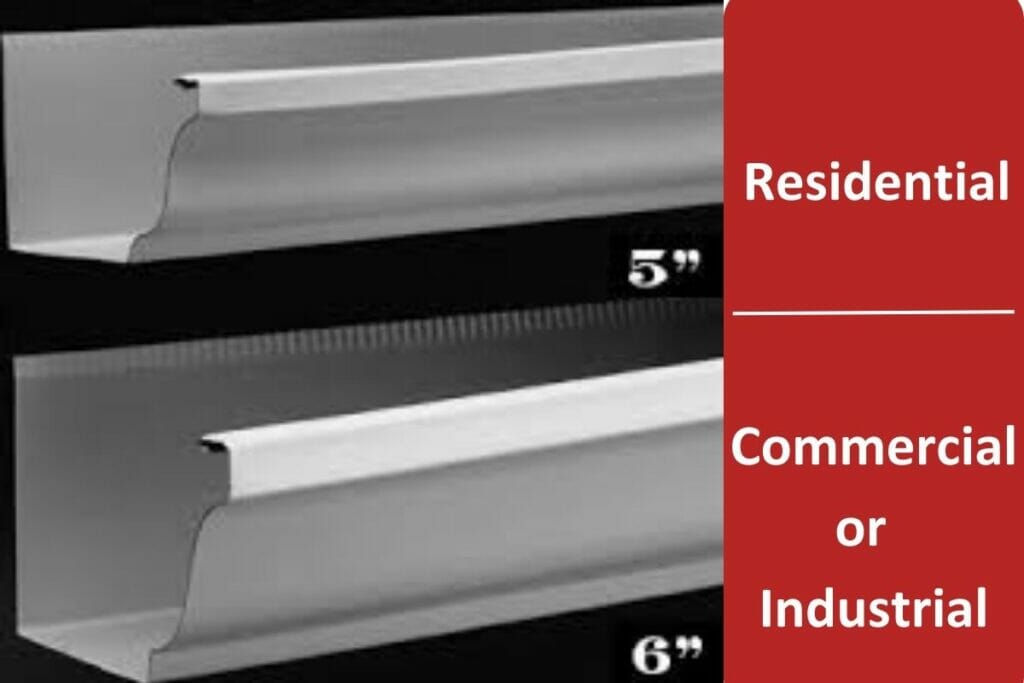
The primary difference between 6-inch gutters and 5-inch gutters lies in their size and capacity. 6-Inch gutters, as the name suggests, have a larger opening to accommodate more water compared to 5-inch gutters. The greater capacity of 6-inch gutters makes them ideal for regions with heavy rainfall or homes with larger roof areas. 6-inch gutters handle 40-50% more water volume than 5-inch models.
| Specification | 5-Inch Gutters | 6-Inch Gutters |
|---|---|---|
| Water Volume Capacity | Standard baseline | 40-50% more than 5-inch |
| Roof Drainage Area | 5,000-5,500 sq ft | 7,500-8,000 sq ft |
| Downspout Spacing | Every 25-30 feet | Every 35-40 feet |
| Initial Cost | Standard pricing | 20-25% higher |
| Cleaning Frequency | 3-4 times per year | 2-3 times per year |
Pros and Cons of 6-Inch Gutters
Pros
- Larger size handles a higher volume of water more effectively
- Reduces the risk of overflowing gutters during heavy rainfall
- Less likely to get clogged with leaves and debris, leading to lower maintenance needs
Cons
- Typically 20-25% higher initial cost compared to 5-inch gutters
- Additional capacity may not be necessary for regions with minimal rainfall or smaller roof areas
Pros and Cons of 5-Inch Gutters
Pros
- More common and widely used in residential settings
- Suitable for homes with moderate rainfall and smaller roof areas
- Generally more cost-effective than 6-inch gutters
Cons
- May struggle to handle heavy rainfall and larger roof areas
- Risk of overflowing gutters and potential water damage in such situations
Factors to Consider When Choosing Gutter Size
To make the right decision between 6-inch and 5-inch gutters, several factors must be taken into account.
Rainfall and Climate Considerations
One of the most important factors is the amount of rainfall your region experiences. If you live in an area prone to heavy downpours or frequent storms, 6-inch gutters may be the better choice to handle the increased volume of water.
On the other hand, if your region has mild weather with moderate rainfall, 5-inch gutters might suffice, providing adequate water drainage for your home.
Roof Size and Pitch
The size and pitch of your roof also play a significant role in determining the appropriate gutter size. Larger roofs will naturally collect more rainwater, necessitating gutters with a higher capacity. 6-inch K-style gutters can handle 7,500-8,000 square feet of roof drainage area, whereas 5-inch versions are suited for 5,000-5,500 square feet.
Additionally, roofs with steeper pitches tend to shed water quicker, which can also impact the gutter’s ability to handle the water flow effectively.
Installation and Aesthetics
The size of your gutter system also affects installation requirements and the visual appearance of your home. 6-inch systems allow for downspouts placed every 35-40 feet, compared to every 25-30 feet for 5-inch systems. This means fewer downspouts are needed with larger gutters, creating a cleaner exterior look while potentially reducing installation complexity.
Frequency of Gutter Maintenance
Another consideration is your willingness and ability to perform gutter maintenance regularly. If you prefer a low-maintenance option, 6-inch gutters might be preferable, as their larger opening reduces the likelihood of clogging. You can expect 2-3 cleanings per year for 6-inch gutters versus 3-4 cleanings for 5-inch gutters.
However, if you are diligent in maintaining your gutters and don’t mind periodic cleaning, 5-inch gutters could be a cost-effective choice.
Making Your Decision: When to Choose 6-Inch Gutters
Having examined the factors to consider, let’s identify situations where 6-inch gutters are the preferred choice.
Areas With Heavy Rainfall
For homeowners in regions with heavy and frequent rainfall, 6-inch gutters offer the advantage of handling the substantial water volume efficiently. By opting for 6-inch gutters, you can ensure that your home remains well-protected even during the most torrential downpours.
Larger Roof Areas
If your home boasts a larger roof, it naturally collects more rainwater. In such cases, 6-inch gutters are better equipped to handle the increased water flow, minimizing the risk of water overflowing the channels.
You Prefer Minimal Maintenance
If you prefer a gutter system that requires less frequent maintenance, 6-inch gutters could be the answer. Their larger size reduces the likelihood of clogging, saving you time and effort on cleaning.
Making Your Decision: When to Choose 5-Inch Gutters
On the other hand, here are some scenarios where 5-inch gutters make more sense.
Areas With Moderate Rainfall
For homeowners in regions with moderate rainfall, 5-inch gutters are typically sufficient to handle the water flow. Opting for 5-inch gutters in such areas can help you maintain effective rainwater management while keeping costs in check.
Smaller Size Roof
If your home has a smaller roof area, it collects less rainwater overall. In such cases, 5-inch gutters can adequately handle the water flow without the need for a larger gutter size.
You’re a Budget-Conscious Homeowner
If budget considerations are a significant factor in your decision-making process, 5-inch gutters often come with a lower price tag than their larger counterpart. Choosing 5-inch gutters can provide a cost-effective solution without compromising on functionality.
Make the Right Choice
Making the decision between 6-inch gutters and 5-inch gutters is an important step in safeguarding the well-being of your home. Take into account factors like the local climate, the size of your roof, and your personal maintenance preferences.
In areas prone to heavy rainfall and homes with larger roof areas, the advantages of 6-inch gutters shine through. These gutters boast optimal water-handling capacity and reduced maintenance needs, offering you peace of mind during heavy rain. On the other hand, if your region enjoys more moderate rainfall and your roof has a smaller surface area, 5-inch gutters may be the perfect match. Moreover, for homeowners who keep a watchful eye on their budgets, 5-inch gutters often come as a cost-effective choice.
While the information provided here is valuable in making an informed decision, consulting a gutter specialist is always recommended. A professional can assess your home’s specific needs, taking into account factors such as rainfall, roof size, and pitch. With their expertise, you can ensure you make the right choice for your unique situation.
Regardless of which path you choose, prioritizing the installation of well-functioning gutters is of paramount importance. These often overlooked yet essential fixtures will safeguard your home from the potential headache of water damage and contribute to the long-term preservation of your property’s value.
So, whether you decide to go with the robust 6-inch gutters or the tried-and-true 5-inch gutters, make sure to weigh all the considerations.
Conclusion
If you ever find yourself in need of expert guidance or assistance for gutter installation and maintenance, consider reaching out to Hepler Contracting at (412) 694-8785. With our expertise and dedication, we can help you make the best decision for your specific needs, ensuring your home remains safeguarded and secure for years to come.
Making the decision between 6-inch and 5-inch gutters is no small task. But with a clear understanding of your home’s requirements and expert advice from professionals like us, you can confidently make the choice that ensures your home stays protected and well-maintained. So, take the time to evaluate your unique situation, and let the right gutters become the heroes that shield your home from water damage.
Can I mix 5-inch and 6-inch gutters on different sections of my home?
While technically possible, mixing gutter sizes on the same home is generally not recommended. Different gutter sizes require different downspout dimensions and hangers, creating inconsistent water flow patterns and a mismatched appearance. Most professionals advise choosing one size for your entire gutter system to ensure uniform performance and aesthetics.
What happens if I install 5-inch gutters when I actually need 6-inch gutters?
Installing undersized gutters can lead to frequent overflows during heavy rain, causing water to cascade over the sides and potentially damage your foundation, siding, and landscaping. The gutters may also clog more frequently as debris accumulates faster in the smaller channel, requiring more maintenance and potentially shortening the system’s lifespan.
How do gutter guards work differently with 6-inch versus 5-inch gutters?
Gutter guards are compatible with both sizes but may perform differently due to the surface area. 6-inch gutters provide more space for guards to catch and shed debris while still allowing water through. Some gutter guard systems are specifically designed for certain gutter sizes, so verify compatibility before purchasing to ensure optimal protection.
Will switching from 5-inch to 6-inch gutters require changes to my existing downspouts?
Yes, upgrading to 6-inch gutters typically requires larger downspouts to match the increased water capacity—usually 3×4 inch rectangular or 4-inch round downspouts instead of the standard 2×3 inch or 3-inch round. The fascia board and hangers may also need reinforcement to support the additional weight of larger gutters filled with water.
Are there situations where even 6-inch gutters might not be enough?
In extreme cases with exceptionally large roof areas, very steep pitches, or regions with torrential rainfall, even 6-inch gutters may be insufficient. Commercial-grade 7-inch or 8-inch gutters exist for such situations, or homeowners might need additional downspouts and strategic gutter placement to manage water flow effectively.