 Pay Online

What are the Best Skylight Types for Commercial Properties?
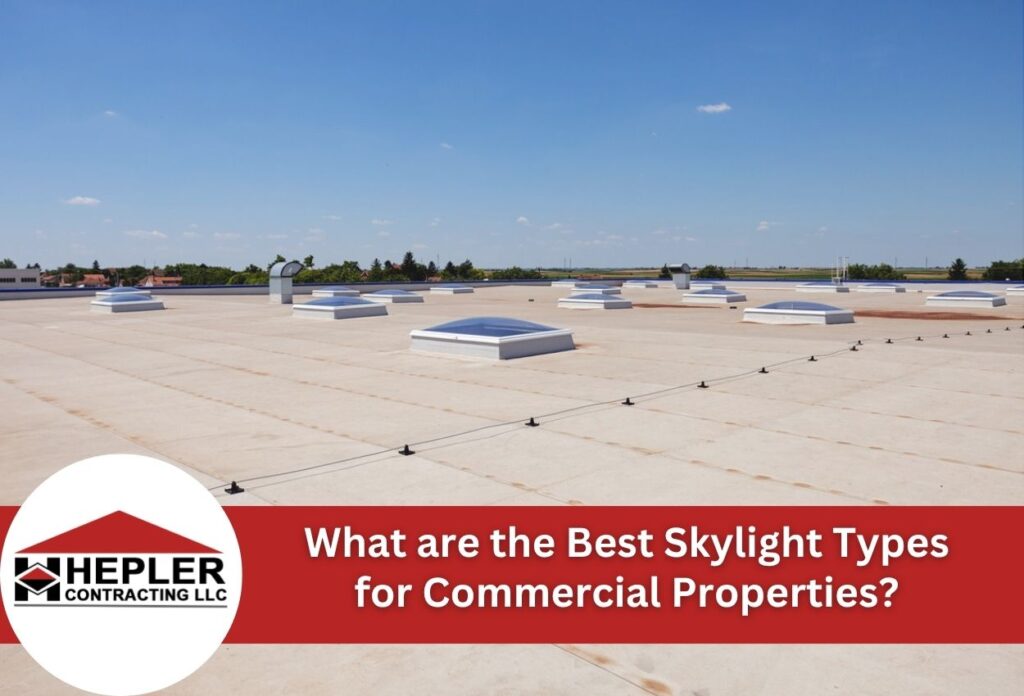
Commercial property owners face a constant challenge: how to create bright, inviting spaces while keeping energy costs under control. The best skylight types for commercial properties offer a powerful solution to both concerns. Modern commercial skylight installation brings abundant natural light into warehouses, office buildings, retail spaces, and industrial facilities, reducing dependence on artificial lighting during daylight hours.
Natural lighting in commercial buildings results in more than just lower electricity bills. In general, employees working in naturally lit environments are more productive and have improved moods. Plus, customers tend to spend more time in retail spaces filled with daylight.
Selecting the right skylight requires looking at several factors. Building structure plays a major role, particularly for flat roofs. Climate conditions also affect performance, with temperature extremes and weather patterns influencing which materials perform best over time. The type of business operations happening beneath the skylights matters too, as different industries have varying needs for light levels and glare control.
Commercial skylight materials range from acrylic and polycarbonate to glass, each with advantages in durability, light transmission, and insulation properties. Understanding these options helps property managers and building owners choose the right skylight that aligns with their specific requirements and long-term maintenance capabilities.
Fixed Skylights: Maximum Energy Efficiency and Low Maintenance
Stationary skylights stand out as the most reliable option for commercial properties seeking consistent natural light without the complications of moving components. These permanently sealed units provide excellent weather protection while delivering steady illumination throughout the day. The absence of mechanical parts means fewer points of failure and reduced maintenance requirements over the skylight’s lifespan.
Fixed skylights often have advanced glazing options that improve energy efficiency. Double or triple-pane configurations paired with low-emissivity (low-E) coatings help regulate interior temperatures while maximizing light transmission. This combination keeps heating and cooling costs manageable even during extreme weather conditions common in regions like Pittsburgh.
Fixed commercial skylight installation works well in high-traffic areas where safety and durability are paramount. Office buildings benefit from the stable lighting conditions that support productive work environments without glare. Retail spaces gain enhanced product visibility and a welcoming atmosphere that natural overhead lighting creates. Warehouses and distribution centers see significant operational advantages, as fixed skylights illuminate large floor areas without requiring electrical infrastructure throughout the space.
Vented Skylights: Improved Indoor Air Quality and Climate Control
Operable skylights bring multiple benefits to commercial buildings by addressing ventilation needs alongside natural illumination. These units open to release hot air that naturally accumulates near ceilings, creating passive cooling that often reduces HVAC usage during moderate weather. The stack effect generated by ventilating skylights pulls fresh air through lower openings while exhausting stale air through the roof, establishing continuous air circulation without mechanical assistance.
Manufacturing facilities gain considerable advantages from vented skylights when managing heat generated by equipment and production processes. Restaurant kitchens benefit from enhanced air quality as cooking fumes and excess heat escape through open roof units. Buildings with high occupancy levels, such as gyms, event spaces, and large retail operations, maintain fresher environments by cycling air throughout the day. This natural ventilation strategy lowers humidity levels and prevents the stuffy conditions that develop in enclosed commercial spaces.
The best skylight types for commercial properties often include operable options for businesses prioritizing environmental control. These systems work particularly well in facilities where traditional HVAC struggles to keep pace with changing conditions. Automated models respond to temperature sensors and rain detection, opening and closing without manual intervention to maintain optimal interior climates while protecting against weather intrusion.
Installing vented units requires examining the existing roof structure to find the best placement for maximum effectiveness. Proper positioning ensures adequate air movement while maintaining the weather-tight seal that flat roofs need. The combination of natural lighting with active ventilation that vented skylights provide creates healthier work environments that support employee well-being and operational efficiency.
Tubular Skylights: Smaller Commercial Spaces and Targeted Lighting
Tubular skylights provide an excellent solution for commercial properties where traditional skylight installation is impractical or unnecessary. These compact systems capture sunlight through a small rooftop dome, then channel it through a highly reflective tube that delivers focused illumination to specific interior areas. The minimal roof penetration required makes tubular units particularly attractive for buildings where structural modifications need to remain limited or where existing roof warranties must be preserved.
The versatility of tubular systems shines in commercial applications that need targeted natural lighting without the expense of larger installations. Interior hallways and corridors often lack windows entirely, creating dim passages that require constant artificial lighting. Tubular skylights transform these spaces with bright, even illumination during the day. Break rooms and employee lounges become more inviting when natural light replaces harsh fluorescent fixtures. Storage areas, filing rooms, and utility spaces gain functional lighting that improves visibility for workers while reducing electrical consumption.
Small office spaces benefit significantly from tubular commercial skylight installation when conventional skylights would overwhelm the limited square footage or create excessive heat gain. The concentrated light output provides adequate illumination for desk work and computer tasks without the glare issues larger units might introduce. Restrooms, changing areas, and private offices can receive natural lighting without compromising privacy or requiring complex structural changes.
Tubular options generally deliver impressive performance relative to their modest size. The reflective tubing maintains light intensity even when passing through attic spaces or between floor levels. This makes them viable for multi-story buildings where bringing daylight to interior spaces typically means extensive modifications. For flat roofs, tubular systems offer weatherproof performance with straightforward flashing details that integrate cleanly with existing roofing materials.
Curb-Mounted Skylights: Solutions for Modern Flat Roofs
Commercial buildings with flat or low-slope roofs require skylight designs specifically engineered for their unique drainage and weatherproofing needs. Unlike pitched roofs, where water naturally runs off, flat roofs need careful installation to prevent water accumulation around the skylight. Curb-mounted skylights are the standard solution for these applications, featuring a raised frame that elevates the glazing above the roof surface to ensure proper water runoff and prevent leaks.
The curb itself serves as the critical interface between the skylight and the roofing system, creating a weathertight seal that withstands thermal expansion and contraction cycles. Commercial skylight materials chosen for the curb typically include aluminum or galvanized steel with factory-applied flashing that integrates seamlessly with TPO, EPDM, or modified bitumen membranes. The curb height needs to be carefully calculated to maintain adequate clearance above ponding water while accounting for insulation thickness and roof slope specifications that impact drainage patterns.
Commercial skylight installation on flat roofs needs closer attention to structural support requirements compared to sloped applications. The roof framing must carry concentrated loads at curb attachment points, often necessitating reinforcement of existing joists or trusses before skylight placement. Engineering assessments verify that load capacities accommodate not just the skylight weight but also anticipated snow accumulation and maintenance access. Buildings with lightweight steel deck construction may require supplemental structural members to distribute forces adequately.
Flashing details often make or break skylight performance over time. The best skylight types for commercial properties feature multi-layer flashing systems that create redundant water barriers around the entire perimeter. Base flashing attaches directly to the curb and extends onto the roof, where it bonds with the primary roofing membrane. Counter flashing caps the assembly, directing water away from vulnerable seams. When working with existing roofing materials, compatibility between flashing components and membrane prevents premature degradation that leads to leaks.
Drainage considerations extend beyond the skylight itself to encompass the surrounding roof area. Proper installation maintains positive drainage away from all sides of the curb, preventing water from pooling against the unit during storms. Crickets or saddles installed on the high side of larger skylights divert water flow around rather than against the curb. These drainage enhancements are particularly important in areas with freeze-thaw cycles, where standing water creates ice dams that can compromise the skylight’s integrity.
Materials and Construction Features That Maximize Durability and Performance
The frame materials selected for commercial skylights directly influence both longevity and maintenance requirements over decades of service. Aluminum frames dominate commercial applications due to their exceptional strength-to-weight ratio and natural corrosion resistance. The material withstands constant exposure to moisture and temperature fluctuations without warping or deteriorating, making it particularly suitable for regions with harsh winters and humid summers. Thermal breaks engineered into aluminum prevent heat transfer that would otherwise compromise the building’s climate control.
Vinyl frames offer advantages in specific commercial settings where budget constraints require balancing the initial investment against long-term performance. The material provides excellent insulation properties and requires no painting or surface treatments throughout its service life. However, vinyl’s structural limitations restrict its use to smaller skylight units, as larger spans need the rigidity that metal frames deliver.
Steel frames enter consideration for industrial facilities and warehouse applications where impact resistance and security take priority over weight considerations. Galvanized or powder-coated steel withstands mechanical abuse while supporting expansive glass that brings in substantial natural lighting.
Glazing technology is the second critical component affecting skylight performance. Laminated glass bonds multiple glass layers with interlayer films that hold fragments together if breaks occur, meeting safety codes while providing UV protection that prevents interior furnishing damage. Tempered glass undergoes heat treatment that increases impact resistance substantially compared to standard annealed glass. Commercial skylight materials often utilize both laminating and tempering processes to achieve the impact ratings mandated by building codes for overhead glazing applications in Pittsburgh and surrounding areas.
The Importance of Professional Installation and Maintenance for Long-Term Success
Successful commercial skylight installation depends on specialized expertise that extends well beyond basic roofing skills. Experienced commercial roofing contractors understand the complex integration points where skylights meet existing roof systems, bringing technical knowledge that prevents the failures that amateur installations frequently produce. Proper curb construction, flashing sequencing, and membrane integration require familiarity with various roofing materials and their specific installation protocols. Contractors who work regularly with commercial buildings know how to maintain positive drainage around penetrations while preserving the roof’s integrity.
Weatherproofing is one of the most critical aspects of skylight installation, as small errors can create persistent problems. Professional installers coordinate skylight placement with the roof structure, ensuring there is adequate support before cutting openings. They apply flashing according to manufacturer specifications, creating overlapping layers that shed water away from vulnerable seams. The best skylight types for commercial properties perform only as well as their installation quality allows. Improper sealing leads to leaks that damage interior finishes and compromise insulation, while inadequate structural support causes units to settle unevenly, breaking seals and creating new pathways for water intrusion.
Ongoing maintenance protects skylight investments and extends their service life substantially beyond what neglect would allow. Inspections should occur twice annually, examining glazing for cracks, checking seals for deterioration, and clearing drainage paths of debris that blocks water flow. Skylights require periodic cleaning to maintain light transmission levels, as accumulated dirt reduces the amount of natural light coming into the building. Condensation between glazing layers signals seal failure, requiring prompt attention before moisture damages surrounding materials. Professional contractors provide maintenance programs that address these concerns systematically, catching minor issues before they need expensive emergency repairs.
Upgrade Your Pittsburgh Business with Skylight Installation from Hepler Contracting LLC
Bright, energy-efficient skylights can completely transform commercial spaces, bringing natural light, comfort, and long-term savings. Whether you’re seeking fixed, ventilating, or tubular options, professional installation ensures lasting performance and protection against Pittsburgh’s challenging weather.
For business owners looking to enhance their building with skylight installation, trust the expertise of Hepler Contracting LLC. Contact our team today at (412) 694-8785 to bring natural light into your commercial space with skylight solutions built to last.