 Pay Online

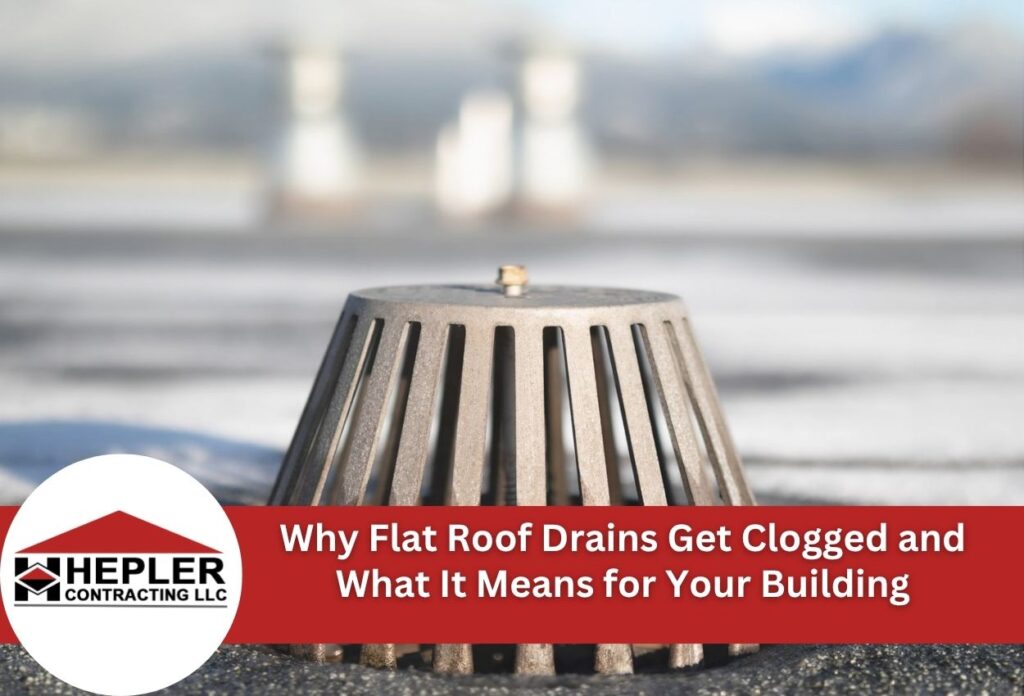
Flat roof drain clogs create serious problems that building owners cannot afford to ignore. These blockages happen more frequently than most people realize, turning a simple maintenance issue into expensive structural damage when left untreated.
Commercial roof drain problems typically start small but grow into major headaches. Leaves, dirt, gravel, and debris naturally accumulate in roof drains over time. Construction materials, plastic bags, and even small branches can create stubborn blockages that prevent proper water flow. Pittsburgh’s seasonal weather changes make this problem worse, as spring rains wash winter debris directly into drainage systems.
When flat roof drains become blocked, pooling water becomes inevitable. This standing water adds tremendous weight to the roof structure and seeps into building materials. The immediate consequences include ceiling stains and interior water damage. Long-term effects prove far more expensive, including roof membrane deterioration, structural weakness, and potential collapse in extreme cases.
Roof drain maintenance prevents these expensive problems before they start. Regular cleaning removes debris buildup and ensures proper water flow during heavy storms. Understanding ways to prevent flat roof water damage prevention helps building owners protect their investment and avoid emergency repairs that could have been easily prevented through routine maintenance.
Warning Signs Your Flat Roof Drain Is Already Blocked
Recognizing the early warning signs of flat roof drain clogs can save building owners from expensive repairs and extensive water damage. Several visual and interior indicators signal when commercial roof drain problems require immediate attention.
The most obvious sign is pooling water on a flat roof that remains visible 24 to 48 hours after rainfall. Standing water creates distinctive dark patches or puddles that should drain completely within a reasonable timeframe. Property owners can easily spot these problem areas during routine roof inspections by looking for areas where water collects and sits instead of flowing toward drains.
Interior warning signs often appear before external problems become severe. Water stains on ceilings typically show up as brown or yellow discolored spots that grow larger over time. Peeling paint, bubbling wallpaper, or soft spots in ceiling materials indicate moisture has entered the interior of the building from blocked drainage above. Musty odors in upper floors or unexpected changes in humidity also signal drainage issues that need professional evaluation.
Flat roof water damage prevention starts with recognizing these warning signs early. Building owners who notice any combination of exterior pooling and interior moisture problems should address potential blockages immediately. Repairing blocked roof drains becomes more complex and expensive when water damage spreads to structural components, making early detection crucial for maintaining building integrity and controlling repair costs.
Simple Steps to Clear Minor Drain Blockages Safely
Property owners can address minor flat roof drain clogs using basic tools and proper safety precautions before calling professional contractors. Essential equipment includes a sturdy ladder, work gloves, safety glasses, and non-slip footwear designed for roof surfaces. A flashlight, plastic bags for debris collection, and a garden hose complete the basic toolkit needed for initial cleaning efforts.
Safety remains the top priority when accessing areas of the roof to address commercial roof drain problems. Workers should never attempt roof maintenance during wet conditions or high winds. Proper ladder placement and having a spotter on the ground is also helpful as it prevents accidents during the cleaning process.
The clearing process begins with removing visible debris from drain openings by hand. Leaves, twigs, and loose materials often create surface blockages that cause pooling water on a flat roof. After clearing surface debris, flush the drain with water from a garden hose to test the flow and identify remaining obstructions.
Property owners should observe water flow patterns during tests to determine if blockages remain deeper in the drainage system. Clear water flow indicates successful debris removal, while continued backing up or slow drainage suggests more complex blockages that require professional intervention. Repairing blocked roof drains sometimes involves issues beyond surface cleaning, making it important to recognize when professional roof drain maintenance becomes necessary for complete system restoration.
When Standing Water Becomes a Serious Problem
Standing water on flat roofs can go from a minor inconvenience into a major structural threat when drainage issues persist. The weight of accumulated water places enormous stress on roof structures, with each inch of standing water adding approximately 5.2 pounds per square foot to the building’s weight capacity. This added weight may exceed design specifications and compromise structural integrity over time.
Pooling water on a flat roof accelerates deterioration through constantly exposing the roof to moisture that breaks down roofing materials. The membrane begins to weaken as consistent leaks create small cracks that expand with temperature changes. Commercial roof drain problems make this problem worse by preventing natural evaporation and creating permanent wet conditions that promote rapid material breakdown.
The connection between persistent standing water and interior building damage extends far beyond surface-level concerns. Water infiltration spreads through ceiling systems, wall cavities, and structural components, creating expensive repairs that affect multiple levels of the building. Electrical systems face serious safety risks from water exposure, while HVAC equipment suffers reduced efficiency and potential failure from moisture-related problems.
Buildings that experience chronic drainage issues often develop mold that creates health hazards and requires specialized remediation services. This is why flat roof water damage prevention is so crucial, as it protects both the building’s structure and occupant safety. Property owners who address roof drain maintenance proactively avoid these cascading problems that turn simple blockages into comprehensive building restoration projects.
Professional Solutions for Stubborn Commercial Roof Drain Issues
When basic cleaning methods fail to resolve persistent drainage problems, roofing contractors employ specialized equipment and advanced techniques to tackle severe flat roof drain clogs. Professional drain clearing services utilize high-pressure water jets that can blast through compacted debris, grease buildup, and mineral deposits that standard methods cannot remove. These powerful systems generate pressures exceeding 4000 PSI, effectively scouring drain pipes and restoring full water flow capacity.
Commercial roof drain problems often require mechanical augers and drain snakes designed specifically for large-scale drainage systems. Professional contractors use heavy-duty equipment that can navigate complex piping configurations and remove stubborn blockages located deep within the drainage network. Video inspection cameras allow technicians to identify exact blockage locations and assess pipe condition before selecting the most effective clearing approach.
Beyond immediate blockage removal, professional solutions address underlying structural issues that cause repeated clogs. Contractors evaluate drain positioning, pipe slope gradients, and connection integrity to identify design flaws that contribute to ongoing drainage problems. Drainage system upgrades may include installing larger capacity drains, adding overflow drains, or reconfiguring pipe layouts to improve the efficiency of water flow.
Professional roof drain maintenance includes system modifications that prevent pooling water on flat roofs. Contractors can install drain guards, upgrade existing hardware, and implement preventive maintenance programs that keep drainage systems functioning properly year-round, eliminating the cycle of repeated blockages and water damage concerns.
Creating a Maintenance Schedule to Prevent Future Blockages
Establishing a comprehensive maintenance schedule prevents clogs from turning into expensive problems. Property owners who implement systematic inspection and cleaning routines significantly reduce the risk of pooling water on a flat roof and associated structural damage.
Seasonal maintenance tasks should align with natural debris cycles and weather patterns. Spring cleaning removes any accumulation that remains after winter, including leaves, ice debris, and storm materials that settled in drainage systems during cold months. Summer inspections focus on checking drain guards and removing vegetation growth that can obstruct water flow. Fall represents the most critical maintenance period, requiring thorough cleaning before heavy leaf drop and winter weather arrives. Winter checks ensure drains remain clear of ice formations and snow buildup that can create dangerous pooling conditions.
Simple preventive measures dramatically reduce the amount of debris that accumulates between scheduled cleanings. Installing quality drain guards prevents large forms of debris from entering the drainage system while allowing water to flow freely. Regularly removing loose gravel, equipment covers, and temporary materials prevents these items from washing into drains during storms as well. You could also trim nearby vegetation, which eliminates the primary source of organic debris that causes most commercial roof drain problems.
Monthly visual inspections help property owners identify potential issues before they become serious blockages. Documenting drain condition and water flow patterns creates valuable maintenance records that help predict when professional roof drain maintenance becomes necessary. This proactive approach ensures effective flat roof water damage prevention through consistent attention to drainage system performance.
Protecting Your Investment Through Smart Drainage Management
Smart drainage management transforms routine maintenance into a powerful investment protection strategy that extends the roof’s lifespan and prevents emergency repairs. Property owners who prioritize proper drain maintenance typically see their roofing systems last 25% to 30% longer than those who neglect drainage issues. This proactive approach addresses flat roof drain clogs before they harm the building’s structural integrity and create expensive damage scenarios.
Regular roof drain maintenance prevents the cascade of problems that begin with minor blockages and escalate into major building repairs. When drainage systems function properly, they eliminate pooling water on a flat roof that leads to membrane deterioration, structural damage, and interior water infiltration. The financial impact of preventive maintenance remains minimal compared to the cost of emergency repairs that can involve roof replacement, structural restoration, and interior damage remediation.
Pittsburgh roofing professionals bring specialized expertise to comprehensive drainage protection strategies that address both immediate concerns and long-term system performance. These contractors evaluate entire drainage networks to identify potential failure points and recommend upgrades that improve the system’s reliability.
Expert Flat Roof Drain Solutions in Pittsburgh
If you’re noticing the telltale signs of clogs within your flat roof drainage system, such as pooling water or interior water damage, it’s crucial to act quickly to protect your building. Ignoring these warning signs can lead to severe structural issues and expensive repairs. Hepler Contracting LLC specializes in diagnosing and resolving commercial roof drain problems efficiently, ensuring your property remains safe and dry.
Don’t let blocked drains compromise the integrity of your roof and building. Take advantage of our professional gutter maintenance services, to prevent future issues and extend the lifespan of your roof. Call Hepler Contracting LLC today at (412) 694-8785 to schedule an inspection and get your drainage system back in top condition.