 Pay Online

Key Points:
- Achieve perfect soffit color matching with siding to enhance your home’s curb appeal and value by understanding color theory and architectural style.
- Consider your home’s architectural style, material types, and natural lighting conditions for harmonious soffit and siding combinations.
- Always test large color samples at various times and avoid common mistakes like ignoring existing fixed elements or small swatches.
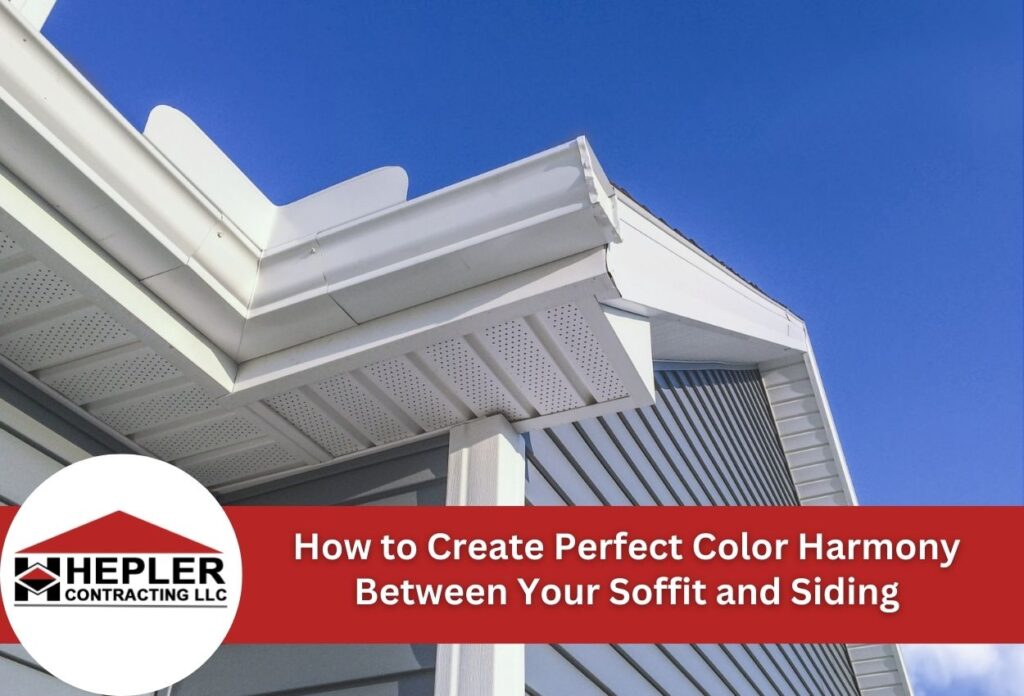
The relationship between the soffit and siding is important for your home’s visual appeal. When these elements work together, they enhance architectural features and can improve overall curb appeal, which may positively influence a future buyer’s perception of the property.
Experienced contractors recognize that effective soffit and fascia board color coordination involves more than simply matching shades. The process involves analyzing your home’s architectural style, considering natural lighting conditions, and selecting exterior trim color that complements rather than competes with existing elements. A home’s color scheme requires paying attention to undertones, contrast levels, and the way colors interact throughout different seasons and times of the day.
Modern vinyl soffit options provide homeowners with unprecedented flexibility in creating cohesive designs. The key lies in understanding which siding and soffit combinations enhance your home’s unique characteristics while maintaining a timeless appeal that often doesn’t require frequent updates as trends change.
Essential Color Theory Principles for Exterior Home Design
Understanding fundamental color relationships transforms how to match soffit colors to siding from guesswork into strategic design. The color wheel provides three primary approaches for exterior trim color selection: complementary schemes use opposite colors for dramatic contrast, other combinations employ hues that are closer together for subtle differences, and monochromatic palettes rely on varying shades of a single color family.
Lighting conditions dramatically impact how siding and soffit combinations appear throughout the day. Morning sunlight reveals warm undertones, while afternoon shadows can make colors appear cooler or darker. Seasonal changes can alter how soffit and siding colors appear, with lower winter sun angles often increasing contrast and higher summer light levels reducing the definition of shadows.
Successful exterior color schemes account for these natural variations by testing color samples under different lighting conditions. North-facing surfaces receive consistent but cooler light, making them ideal for warmer color palettes, while south-facing areas benefit from cooler tones that won’t appear washed out in direct sunlight. Proper soffit and fascia board color coordination considers these environmental factors alongside architectural elements to create lasting visual appeal.
Popular Soffit and Siding Color Combination Strategies
Using an approach where the same color is utilized throughout can create seamless visual flow by using identical shades for the fascia boards, siding, and soffit, eliminating visual breaks that can fragment a home’s appearance. This technique works exceptionally well with neutral foundation methods, where beige, gray, or cream tones provide sophisticated backdrops that highlight architectural details without overwhelming the design.
Contrasting colors offer dynamic alternatives for homeowners seeking more visual interest. Dark soffits paired with lighter siding create defined rooflines that emphasize architectural structure, while light soffits against darker walls produce an uplifting effect that makes homes appear larger. These vinyl soffit color options require a balance to avoid stark contrasts that feel jarring rather than intentional.
Trending color pairings blend contemporary looks with enduring appeal. Warm whites combined with soft grays deliver modern sophistication, while charcoal soffits paired with cream siding offer timeless elegance. These siding and soffit combinations work across various architectural styles, from traditional Colonials to contemporary designs, ensuring long-term satisfaction as exterior design preferences evolve.
Architectural Style Considerations for Color Selection
Traditional architectural styles have specific parameters for how to match soffit colors to siding while maintaining authentic visual character. Colonial homes benefit from classic white or cream soffits paired with historically appropriate siding colors like deep blues, warm grays, or traditional clapboard white. These timeless siding and soffit combinations respect the symmetrical, formal nature of Colonial design while ensuring proper soffit and fascia color coordination that enhances rather than detracts from architectural integrity.
Craftsman-style homes embrace earthier exterior trim color selection, with natural wood tones, sage greens, and warm browns creating harmonious home exterior color schemes. Victorian architecture allows for more elaborate color treatments, where contrasting soffit colors can highlight ornate trim work and decorative elements that define this distinctive style.
Contemporary and modern architectural elements provide greater freedom for bold vinyl soffit color options while maintaining a balanced color design. Clean lines and minimalist features accommodate dramatic contrasts, such as charcoal soffits against bright white siding, or subtle variations that create depth without visual complexity. These approaches allow homeowners to express personal style preferences while respecting the fundamental design principles that make modern architecture visually compelling and structurally cohesive.
The Types of Material and Their Impact on Color Matching
Different soffit materials exhibit unique color characteristics that significantly affect how to match soffit colors to siding. Vinyl soffits offer the widest range of vinyl soffit color options and maintain consistent hues over time, making them ideal for precise exterior trim color selection. Their non-porous surface resists fading and provides color matching with various siding materials, from fiber cement to traditional wood clapboard.
Aluminum soffits deliver superior fade resistance but reflect light differently than vinyl, creating subtle color variations even when technically matching siding shades. Wood soffits absorb stains and paints uniquely, producing richer color depth that can enhance natural siding materials, but may require more frequent maintenance to preserve the color coordination between soffits and fascia boards.
Surface texture plays an important role in color perception and matching decisions. Smooth soffit surfaces reflect light uniformly, making colors appear brighter and more consistent with painted siding. Textured surfaces scatter light, creating subtle shadow effects that can make identical colors appear slightly different. These textural considerations become essential when developing cohesive home exterior color schemes, as the interplay between smooth and textured elements affects how siding and soffit combinations appear from various viewing angles and distances.
Practical Steps for Testing and Finalizing Your Color Choices
Testing color selections on actual home exteriors requires strategic timing and systematic evaluation methods. Sample boards should be positioned on multiple sides of the house to observe how different lighting conditions affect siding and soffit combinations throughout the day. Morning, midday, and evening observations reveal how vinyl soffit color options appear under varying natural light, ensuring an accurate assessment of exterior trim color selection before making final decisions.
Professional consultation provides valuable expertise when developing complex home exterior color schemes. Experienced contractors offer insight into how specific colors perform over time, which siding and soffit combinations work best with existing architectural features, and how regional climate conditions affect color durability. Color specialists can identify undertones that may not be immediately apparent to homeowners but significantly impact long-term satisfaction with soffit and fascia color coordination.
Neighbor feedback and community appearance considerations help ensure color choices enhance rather than detract from other homes in the neighborhood. Professional contractors understand local preferences and can guide homeowners toward color selections that can potentially increase property value while expressing personal style preferences through thoughtful, well-executed exterior design choices.
Common Color Matching Mistakes and How to Avoid Them
Homeowners frequently make critical errors when selecting colors that can compromise their entire exterior design. One of the most prevalent mistakes involves ignoring existing fixed elements like stone foundations, brick chimneys, or roofing materials when determining how to match soffit colors to siding. These permanent features have established colors that can act as a guide for all other exterior trim colors to achieve a cohesive home exterior color scheme.
Small color samples create another common pitfall that leads to disappointing results. Viewing tiny swatches fails to reveal how soffit color options will appear across large surface areas, where subtle undertones become amplified and lighting effects change dramatically. Successful siding and soffit combinations require an evaluation of larger sample boards positioned on the actual house to accurately assess color.
Long-term planning often gets overlooked during initial color selection. Different materials fade at varying rates, meaning perfectly matched colors may diverge over time without the proper consideration of fading. Maintenance requirements also differ between materials, with some requiring frequent touch-ups to maintain optimal soffit and fascia color coordination. Smart homeowners consider these factors alongside future resale value implications when making color decisions that will serve their homes for years to come.
Expert Soffit and Siding Color Coordination with Hepler Contracting LLC
Choosing the right color combination for your soffit and siding is crucial in enhancing the curb appeal and value of your home. At Hepler Contracting LLC, we specialize in creating perfect harmony between your home’s exterior elements. Our professional team uses advanced color-matching techniques to ensure a seamless integration that complements your home’s architecture and style. Don’t let color coordination be a guessing game.
Call us now at (412) 694-8785 to schedule a consultation with our color coordination experts at Hepler Contracting LLC. Enhance your home’s beauty and value today!