 Pay Online

Key Points:
- Step flashing is crucial for preventing roof leaks by creating a waterproof barrier where your roof meets vertical surfaces like chimneys.
- Its overlapping, stepped design effectively channels water away from vulnerable areas, protecting your home from expensive water damage.
- Regular inspection and professional installation or repair are essential to avoid expensive structural issues from compromised flashing.
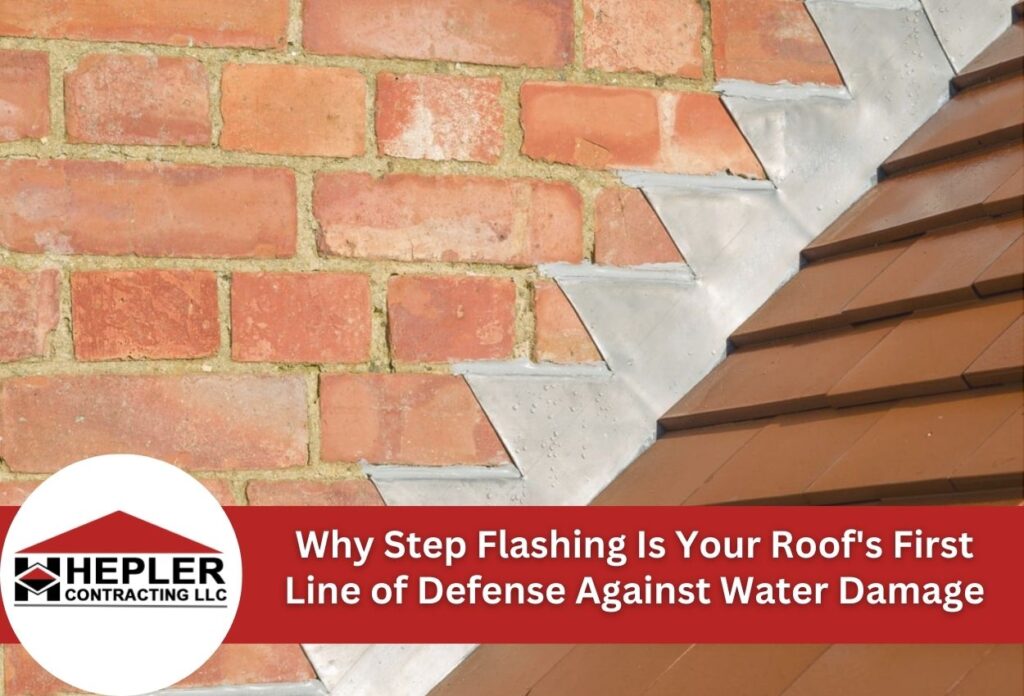
Step flashing is an important waterproof barrier where your roof meets vertical surfaces such as chimneys, dormers, and sidewalls. This L-shaped metal component channels water away from vulnerable roof gaps, preventing moisture from seeping into your home’s interior structure.
The importance of step flashing cannot be overstated. Without proper step flashing, water can easily infiltrate the gap between your roof and adjacent walls, leading to extensive damage, including rotted framing, mold growth, and compromised insulation. Each piece of step flashing overlaps with the next, creating a continuous shield that directs water down and away from the roof deck.
When step flashing fails or becomes damaged, even the smallest breach can result in significant leaks. Understanding how this essential roofing component functions helps homeowners recognize potential problems early and take appropriate action to prevent a roof leak before minor issues turn into expensive repairs.
How Step Flashing Works to Channel Water Away From Your Home
Step flashing operates on a simple yet effective principle of water displacement through overlapping metal segments. Each step piece is installed beneath a shingle course and extends up the vertical wall surface, creating a continuous pathway that redirects water flow away from vulnerable roof joints.
The stepped design follows your roof’s natural slope, ensuring that water cannot pool or find entry points between the roofing materials and adjacent structures. As water travels down the roof’s surface, each step flashing piece captures moisture and guides it to the next lower segment, maintaining watertight seals at every shingle course.
This overlapping system is essential for preventing roof leaks because it eliminates static water buildup that could otherwise get through gaps or deteriorated caulking. The science behind proper water flow management relies on gravity and strategic positioning, where each layer of step flashing creates multiple barriers against water intrusion. When functioning correctly, this system provides reliable protection against the freeze-thaw cycles and heavy rainfall common in many climates, making step flashing maintenance a priority for long-term roof performance.
The Most Vulnerable Areas Where Step Flashing Failures Lead to Roof Leaks
Step flashing failures typically occur at specific roof intersections where water pressure and debris accumulation create the greatest stress on these protective barriers. Chimneys are the highest risk zone, as the large vertical structure creates multiple angles where step flashing needs to maintain a watertight seal against shingles and masonry surfaces.
Dormer and bay windows are the second most common failure points for step flashing installation problems. These architectural features create complex roof geometries where multiple planes intersect, requiring precise flashing work to prevent leaks from forming.
Wall intersections where roof lines meet exterior walls also experience frequent step flashing deterioration. Ice dams, wind-driven rain, and thermal expansion can compromise the metal segments over time, and the warning signs show up as water stains on interior walls, peeling paint, or visible rust and corrosion on exposed flashing edges. Addressing these vulnerable areas through regular flashing maintenance helps ensure effective leak prevention before water damage spreads to structural components.
The High Cost of Ignoring Proper Step Flashing Installation
Neglecting to properly install step flashing creates a bunch of expensive problems that go beyond simple roof leaks. When water goes through compromised flashing, it infiltrates wall cavities and causes extensive interior damage that often remains hidden until significant structural deterioration occurs.
Wall rot is one of the most serious consequences of inadequate step flashing. Moisture trapped within walls leads to wood decay, compromised framing, and potential structural instability. Insulation becomes saturated and loses its thermal efficiency, creating higher energy costs and uncomfortable living conditions. The importance of step flashing becomes clear when considering that these interior repairs are often more expensive than replacing damaged step flashing.
Winter weather adds to these problems when a poor step flashing installation allows water to freeze within the roofing system. Ice dam formation occurs more frequently around compromised flashing areas, as trapped moisture creates additional freeze-thaw cycles that worsen existing damage. These ice dams force water under shingles and through vulnerable flashing connections, accelerating the deterioration process and creating emergency repair situations during harsh weather conditions.
Professional Installation Techniques That Ensure Long-Lasting Protection
Proper step flashing installation requires precise measurements and methodical placement to create effective barriers against water intrusion. Professional roofers begin by establishing correct overlap measurements, typically ensuring each step piece overlaps the lower segment by at least 2 inches to maintain continuous water flow channels.
Fastener placement is important for long-term performance, with each piece of step flashing being secured through the vertical leg into solid wall framing rather than just surface materials. This technique prevents wind uplift and thermal movement from compromising the flashing connections over time. Professional contractors also integrate step flashing seamlessly with existing roofing materials, weaving each piece under the shingle course above and over the shingle below.
Counter flashing and high-quality sealants complete the waterproof system by covering the upper edges of step flashing where it meets vertical surfaces. These components work together to create multiple layers of protection against leaks. The importance of step flashing can’t be ignored, especially when all of the surrounding elements function as an integrated system, making professional flashing repairs and installation essential for preventing water damage and ensuring reliable performance.
Maintaining Your Step Flashing to Prevent Future Leaks
Proactive step flashing maintenance protects your home from expensive water damage through regular inspection and timely repairs. Homeowners should examine step flashing areas twice a year, checking for loose segments, rust formation, or gaps where metal meets roofing materials and vertical surfaces.
Visual inspection from ground level can reveal obvious problems like missing pieces or separated flashing connections. Look for water stains on interior walls near the chimney and dormer areas, as these often indicate failing step flashing before exterior damage becomes apparent.
Simple maintenance includes clearing debris from flashing areas and ensuring gutters drain properly to reduce water backup. However, any step flashing installation, repairs, or replacement work requires expertise due to its complex integration with roofing materials. Professional repairs ensure a proper overlap, secure fastening, and weatherproof sealing that maintains effective roof leak prevention for years to come.
When to Repair vs. Replace Your Step Flashing System
Determining whether step flashing needs repair or complete replacement requires a careful assessment of the existing system’s overall condition. Minor issues like loose segments, small gaps, or localized rust spots often respond well to targeted roof flashing repair techniques that restore protective function without full system replacement.
Spot repairs work effectively when the damage isn’t extensive, and the underlying metal remains structurally sound. These repairs typically involve re-securing loose pieces, applying high-grade sealants to small gaps, or replacing individual damaged segments while preserving the majority of the existing system.
However, widespread corrosion, multiple separation points, or extensive ice damage indicate that a full replacement will provide a better long-term value overall. When step flashing shows signs of fatigue across multiple roof intersections, attempting piecemeal repairs often leads to recurring problems and higher total costs. Complete step flashing replacement ensures uniform protection and eliminates further issues, making this investment essential for preventing leaks and maintaining your home’s structural integrity.
Protect Your Home with Hepler Contracting LLC’s Expert Step Flashing Installation
Don’t let water damage compromise the safety and comfort of your home. At Hepler Contracting LLC, we specialize in the expert installation and maintenance of step flashing.
Whether it’s the integration of step flashing around chimneys, dormers, or wall intersections, our skilled technicians ensure every piece is meticulously installed to maintain watertight seals.
Don’t wait for the first sign of a leak. Call us today at (412) 694-8785 and ensure your home’s roof has the best defense against water damage with our professional step flashing services.