 Pay Online

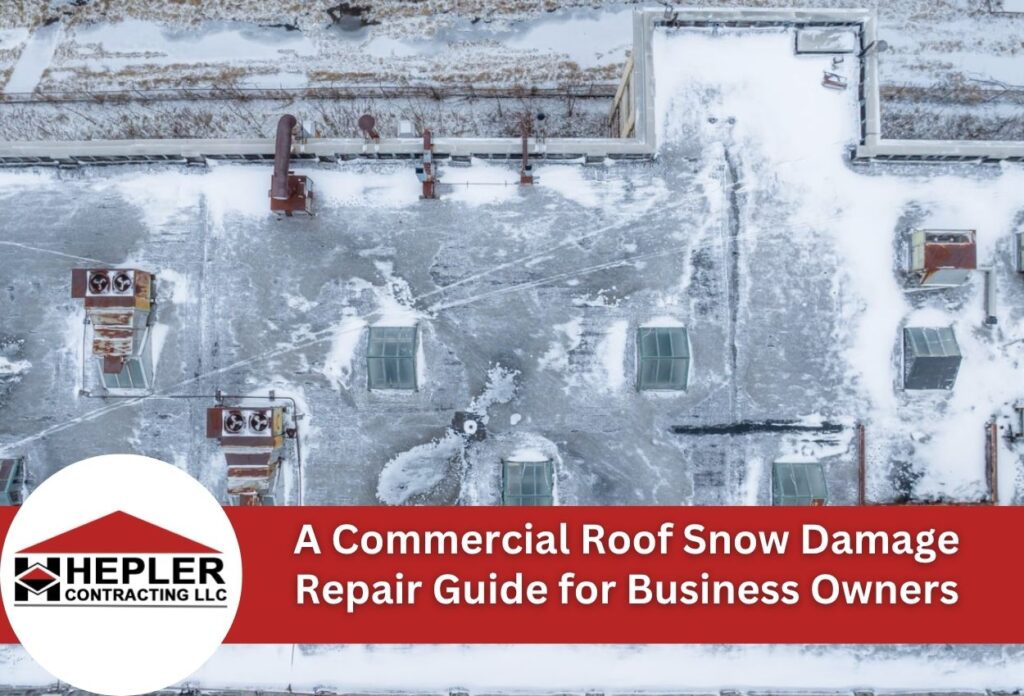
Winter storms can transform a sturdy commercial roof into a vulnerable structure struggling under the weight of accumulated snow and ice. Commercial buildings face unique challenges during harsh winter months, as heavy snow loads create tremendous pressure that can compromise even the most robust roofing systems. The combination of fluctuating temperatures, melting snow, and refreezing cycles puts commercial roofs at serious risk for structural damage.
Commercial roof snow load damage occurs when accumulated precipitation exceeds the building’s designed weight capacity. Flat roof snow damage repair becomes especially important since these surfaces cannot shed snow naturally like sloped residential roofs. When snow builds up and compresses into dense layers, the resulting pressure can cause membrane tears, structural sagging, and water infiltration.
Property managers and building owners often discover commercial roof leaks after snowfall, signaling that immediate attention is required. The weight from heavy snow accumulation can stress support beams, crack roofing materials, and create entry points for moisture. Understanding these winter roof damage patterns helps commercial property owners recognize when professional intervention becomes necessary. Snow removal from commercial roofs and prompt repair services can prevent minor issues from developing into costly structural problems that threaten business operations.
Why Flat Commercial Roofs Face Greater Snow Damage Risks
Flat commercial roofs present inherent design challenges that make them particularly susceptible to snow-related damage. Unlike sloped residential roofs that naturally shed precipitation, flat roof systems struggle with proper drainage and weight distribution during winter weather. This fundamental design difference creates significant vulnerabilities when heavy snow accumulates.
The primary concern with flat roof snow damage repair stems from inadequate drainage capabilities. When snow melts during warmer periods, water has nowhere to flow efficiently, leading to ponding water that refreezes and creates additional structural stress. This cycle repeatedly stresses roofing membranes and can cause premature failure of waterproofing systems.
Certain areas on commercial roofs experience disproportionate snow accumulation, creating dangerous pressure points. Roof edges often collect drifting snow due to wind patterns, while HVAC equipment areas trap precipitation around units and ductwork. Structural transitions, including expansion joints and parapet walls, also become problem zones where snow removal from commercial roofs becomes critical.
Commercial roof snow load damage typically develops in these high-accumulation areas first. The uneven distribution of weight can overwhelm support structures, leading to sagging, membrane tears, and eventual leaks. Winter roof damage in commercial buildings often originates from these predictable trouble spots, making regular monitoring essential for preventing expensive commercial roof leaks after snow situations.
Emergency Assessment After Heavy Snowfall
After significant snowfall, conducting a thorough safety assessment becomes important for identifying potential commercial roof snow load damage. Visual inspection from ground level should be the first step, using binoculars to examine the roofline for obvious sagging, displaced equipment, or visible membrane damage. Building occupants can also provide valuable information about unusual sounds, ceiling stains, or temperature changes that might indicate structural stress.
Interior warning signs often appear before exterior damage becomes visible. Water stains on ceilings, unusual creaking sounds, or doors that suddenly stick can all signal that winter roof damage in commercial buildings requires immediate attention. These symptoms suggest the roof structure may be compromised under excessive snow loads.
Professional evaluation becomes necessary when snow accumulation exceeds 18 inches on flat surfaces or when any structural deformation is visible. Commercial roof leaks after snow need immediate contractor response, as does any sagging greater than 1 inch across support beams. Emergency snow removal from commercial roofs should be scheduled when loads approach or exceed design specifications.
Non-urgent flat roof snow damage repair can typically wait until spring for minor membrane punctures without active leaking or cosmetic damage that doesn’t affect structural integrity. However, property owners should document all observed damage through photographs and continue monitoring conditions. Prompt professional assessment helps distinguish between emergencies requiring immediate intervention and maintenance issues that can be addressed during scheduled repairs.
Professional Snow Removal Strategies That Prevent Further Damage
Professional roofing contractors employ specialized techniques to safely remove dangerous snow loads from commercial buildings without compromising existing roofing materials. These experts could use steam for ice dam removal in commercial buildings, which melts accumulated ice without applying mechanical pressure that could puncture membranes or damage flashing systems. Professional snow removal teams also utilize lightweight aluminum tools designed specifically for commercial roofing surfaces.
Strategic removal patterns help distribute remaining weight evenly across the roof. Contractors typically remove snow in sections, starting with areas showing the highest accumulation while leaving some coverage to protect the membrane from temperature shock. This methodical approach prevents sudden weight shifts that could cause additional structural stress during the removal process.
Understanding proper timing for professional snow removal services can prevent emergency commercial roof repair situations from developing. Most contractors recommend scheduling removal when snow depth exceeds 12 inches on flat surfaces or when ice dams begin forming along roof edges. Preventive removal becomes especially important when weather forecasts predict additional precipitation or warming trends that could increase weight through melting and refreezing cycles.
Early intervention through professional snow removal typically costs significantly less than waiting for structural damage to occur. Property managers who schedule preventive services avoid expensive emergency commercial roof repair calls and protect their buildings from expensive water damage, structural repairs, and business interruption that results from winter roof maintenance commercial properties neglect during critical weather periods.
Common Repair Techniques for Snow-Damaged Commercial Roofs
Professional roofing contractors utilize specific repair methods tailored to address the most frequent types of commercial roof snow damage. Membrane punctures from ice formation require patch application using compatible materials that match the existing roofing system. Single-ply membranes typically receive heat-welded patches, while modified bitumen systems use torch-applied repairs that create watertight seals over damaged areas.
Seam separations represent another common type of roof damage that commercial buildings experience when snow loads stress roofing joints beyond their design limits. Repair techniques include cleaning affected seams, applying primer, and installing reinforcement strips that extend beyond the original separation. Professional contractors use specialized adhesives and mechanical fasteners appropriate for specific membrane types to restore structural integrity.
Structural damage from excessive snow weight often requires an assessment before repair work begins. Damaged support beams may need reinforcement or replacement, while sagging roof decks require structural evaluation to determine load-bearing capacity. Commercial roof leaks after snowfall frequently involve multiple repair approaches, combining membrane patching with structural reinforcement to address both immediate water infiltration and underlying support issues.
Flat roof snow damage repair projects often incorporate preventive measures during restoration work. Installing additional drainage systems, upgrading insulation, or adding structural reinforcement helps buildings better withstand future winter weather events. These comprehensive approaches address immediate damage while improving commercial roof snow load capacity for long-term performance and durability through subsequent winter seasons.
Preventing Future Winter Roof Problems
Implementing maintenance strategies significantly reduces the likelihood of recurring snow damage. Fall inspections conducted by qualified roofing professionals identify vulnerable areas before winter weather arrives, including loose membrane sections, inadequate drainage systems, and structural weaknesses that could fail under snow loads.
Drainage improvements represent one of the most effective winter roof damage prevention measures for commercial buildings. Installing additional roof drains, upgrading downspouts, and ensuring proper slope toward drainage points helps prevent water accumulation that leads to ice formation. Enhanced drainage systems also facilitate snow removal from commercial buildings by providing clear pathways for meltwater during warmer periods.
Structural reinforcement projects can substantially increase commercial roof snow load capacity without a complete roof replacement. Adding support beams, upgrading deck materials, and strengthening attachment points between roofing membranes and structural components creates more resilient systems. These modifications prove especially valuable for older buildings that may not meet current snow load requirements.
Material upgrades during routine repairs offer opportunities to improve future winter performance. Installing impact-resistant membranes, upgrading insulation systems, and adding protective layers around equipment areas help prevent flat roof ice dam removal emergencies. These strategic improvements address common failure points while extending overall roofing system lifespan, creating buildings better equipped to handle severe winter weather conditions without compromising structural integrity or requiring frequent repair interventions.
Working With Professional Roofing Contractors for Snow Damage
Selecting the right commercial roofing contractor for snow damage repairs requires a careful evaluation of specific qualifications and experience with winter-related roofing issues. Qualified contractors should have an extensive background in commercial roof snow load damage assessment and repair techniques specific to various membrane systems. Certification from major roofing manufacturers, active licensing, and insurance coverage provide essential protection for property owners facing urgent repair needs.
Emergency response capabilities distinguish exceptional contractors from standard service providers when commercial roof leaks after snowfall threaten business operations. Reliable contractors maintain 24-hour availability during severe weather seasons and can mobilize equipment for immediate snow removal from commercial roofs.
Professional snow damage restoration follows systematic phases beginning with structural safety assessment and damage documentation. Initial evaluation typically requires 1 to 2 days, followed by detailed repair proposals outlining the project’s size, materials needed, and timeline expectations. Simple flat roof snow damage repair projects may be completed within several days, while extensive structural damage can require weeks for comprehensive restoration, including permit acquisition and material procurement.
Business owners should expect regular progress updates and clear communication throughout the winter roof damage prevention and repair processes. Professional contractors coordinate with insurance adjusters, provide detailed documentation, and minimize operational disruptions through efficient project scheduling. Understanding typical repair timelines helps property managers plan accordingly and maintain realistic expectations during restoration projects.
Immediate Solutions for Repairing Snow Damage on Commercial Roofs
At Hepler Contracting LLC, we specialize in assessing and repairing roofs that have suffered from severe snow weight. Whether it’s a flat roof struggling with drainage or a sloped roof burdened by ice dams, our team is equipped to handle all aspects of snow damage repair.
Don’t wait for minor damage to escalate into a major financial and safety concern. If you observe any signs of sagging, leaks, or structural stress, call us immediately at (412) 694-8785 for a professional evaluation and timely repair. Trust Hepler Contracting LLC to provide reliable solutions and prevent future winter weather damage to your commercial roofing system.