 Pay Online

Understanding TPO Welding: A Comprehensive Guide for Commercial Roofing Projects
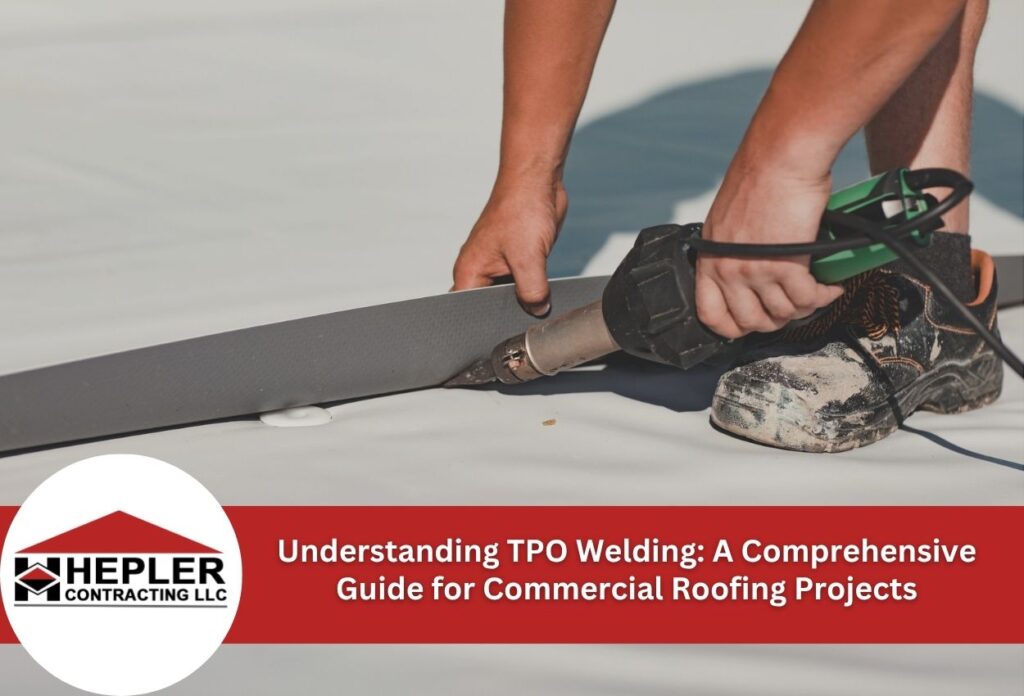
TPO welding is a heat-fusion process used to create watertight seals in TPO roofing systems. This technique bonds TPO membrane seams together, creating a single, continuous waterproof surface that protects commercial buildings from water. Unlike traditional roofing methods that rely on adhesives or mechanical fasteners, TPO welding creates bonds that are actually stronger than the membrane itself, resulting in exceptional durability and longevity.
Commercial building owners and property managers across Pittsburgh are increasingly choosing TPO welded roofing systems for their flat roof applications due to their outstanding performance characteristics. The hot air welding process used with TPO membranes delivers superior weather resistance, making these roofs particularly well-suited for withstanding Pennsylvania’s diverse weather patterns, from summer heat to winter snow and ice. TPO roofing also offers excellent energy efficiency through its highly reflective surface, which helps reduce cooling costs during warmer months.
The TPO single-ply membrane heat welding process requires specialized equipment and trained technicians to ensure proper installation. Professional roofing contractors use hot-air welders that reach temperatures between 900 to 1,300 degrees Fahrenheit to melt the membrane surfaces together, creating a permanent bond that forms the backbone of a reliable commercial roofing system.
The Science Behind TPO Membrane Heat Welding
Heat welding TPO membranes involves a molecular transformation that creates exceptionally strong, waterproof roofing systems. When high-temperature air (typically between 1,000 and 1,150 degrees) contacts the TPO material, it temporarily breaks down the polymer chains in the membrane. As these thermoplastic molecules melt and bond together, they create a permanent fusion that’s stronger than the original membrane itself.
TPO membranes consist of polypropylene and ethylene-propylene rubber polymers, plus additional reinforcing materials like polyester and fiberglass. This unique chemical composition allows TPO to exhibit both plastic and rubber-like properties, making it ideal for heat welding applications. Unlike other roofing materials that rely on adhesive, which can degrade over time, these heat-welded seams form a molecular bond that becomes virtually inseparable.
Pittsburgh’s challenging weather conditions, from freezing winters to hot summers, need roofing systems that maintain their structural integrity through extreme temperature fluctuations. The chemical structure of TPO resists degradation from UV exposure, ponding water, and temperature cycles common in our region. When properly installed by certified Pittsburgh roofing professionals using commercial TPO roof welding equipment, these heat-welded seams create a continuous waterproof barrier that prevents water infiltration at traditionally vulnerable roof junction points. This seamless integration is why TPO has become a preferred solution for commercial flat roofing projects requiring maximum durability.
Essential TPO Welding Equipment for Professional Roofers
Successful TPO roof installation depends heavily on having the right equipment. Professional roofers in the Pittsburgh area rely on several specialized tools to create watertight seams that withstand our region’s challenging weather conditions. The cornerstone of any TPO welding setup is the hot air welder, which comes in two varieties: handheld and automatic. Handheld welders offer precision for detail work and repairs, while automatic welders provide consistent speed and uniform heat application across long seams on larger commercial projects.
Equally important are silicone seam rollers, which apply pressure to the heated overlaps, ensuring proper fusion between TPO membrane layers. Temperature verification is important during the welding process, making digital thermometers essential for monitoring both the welder’s output temperature and outdoor conditions that might impact welding quality.
Pittsburgh commercial property owners benefit from contractors who maintain a complete arsenal of TPO welding equipment, ensuring their flat roof installation achieves optimal waterproofing performance regardless of project size.
TPO Welding Techniques for Optimal Results
Achieving high-quality TPO welding results requires careful attention to technique and environmental conditions. The process begins with thorough surface preparation. All TPO membrane surfaces must be completely clean and dry before welding. Even minimal contamination can compromise the seam’s structural integrity. Professional roofers in Pittsburgh use specialized cleaning solutions to remove dirt, oils, and manufacturing residues that might interfere with proper heat welding.
Proper membrane positioning is critical before welding begins. TPO sheets should be laid with a minimum 3-inch overlap at all seams. Automatic welders work best on long, straight runs, while hand welders handle detail work around vents, HVAC equipment, and corners.
Weather significantly impacts TPO welding success in our region. During Pittsburgh’s humid summer, moisture trapped between membranes can create steam pockets that weaken seams. In colder conditions, preheating the membrane edges may be necessary. Wind presents another challenge, potentially cooling the welding area prematurely. Experienced TPO installers use wind screens and adjust their technique accordingly. The most common welding challenges include inconsistent temperature application, improper roller pressure, and working too quickly or too slowly, all factors that professional contractors carefully control to ensure watertight TPO installations.
Quality Control and Testing for TPO Welded Seams
Ensuring proper weld quality is critical for the long-term performance of any TPO roofing system. Professional roofers use multiple inspection methods to verify that each seam meets the strict standards required for waterproof integrity. The quality control process begins with visual inspections, where technicians look for consistent weld width, proper edge exposure, and the absence of wrinkles that could compromise the seal.
Physical testing follows visual inspection, with seam probes being the primary tool used to test weld strength. This non-destructive method involves pulling a dull probe along the edge of completed seams to identify any unwelded areas. For more comprehensive verification, destructive testing may be performed on test welds or sample sections where small portions of completed seams are cut out and subjected to peel tests to measure bond strength.
Pittsburgh commercial property owners benefit from working with roofing contractors who adhere to industry standards requiring TPO welds to withstand specific minimum peel and shear strength requirements. Advanced testing methods, such as infrared scanning, can detect moisture or air trapped within seams that might not be visible to the naked eye. Through rigorous quality control protocols, professional roofers ensure that TPO roofing systems provide the waterproof protection and longevity that commercial buildings require, particularly important given our region’s variable weather conditions.
Comparing TPO Welding Methods: Hot Air vs. Alternative Techniques
While hot air welding remains the industry standard for TPO membrane installation, roofing contractors have several alternative methods at their disposal. Each technique offers distinct advantages depending on the project requirements.
Alternative methods include solvent-based welding, which uses chemical agents to temporarily dissolve the membrane surfaces before fusion. While effective for small repairs, this approach generally produces less consistent results than hot air methods and requires additional ventilation precautions. Induction welding represents another option, using electromagnetic energy to heat specially designed plates that bond the membrane to the substrate while simultaneously sealing overlaps.
The choice between welding methods often depends on project-specific factors. Hot air welding excels in most standard commercial applications but may present challenges in extremely confined spaces. Weather conditions also influence method selection, with hot air welding becoming difficult in high winds or extremely cold temperatures in winter. For time-sensitive projects, automatic hot air welders offer significant speed advantages for long, straight seams, while detail work around roof penetrations may require alternative approaches.
TPO Welding Maintenance and Repair Strategies for Long-Term Performance
Maintaining welded TPO seams is essential for maximizing the lifespan of commercial roofing systems. An inspection twice a year, typically in spring and fall, with additional checks following severe weather, is typically good for keeping the seams intact. During these inspections, roofing professionals look for telltale signs of weld deterioration, including separation at seam edges, bubbling within the weld area, or visible punctures that compromise the roofing system’s structural integrity.
Preventative maintenance for TPO-welded roofs includes keeping the surface clean of debris that might damage the membrane, trimming overhanging branches, and addressing standing water issues that could stress seams over time. When problems are detected, professional repair techniques vary based on the severity of the damage. Minor seam separations can often be addressed through re-welding after thorough cleaning of the affected area. For more substantial damage, patch welding may be necessary, which involves cutting and preparing a TPO patch that extends at least 3 inches beyond the damaged area in all directions.
Pittsburgh commercial building owners benefit from establishing ongoing maintenance relationships with qualified roofing contractors who understand the unique challenges TPO roofing systems face in our region. Through proper maintenance and repairs using professional hot air welding equipment, TPO roofing systems can deliver their full performance potential, sometimes even extending their service life well beyond standard warranty periods.
Expert TPO Welding Services in Pittsburgh by Hepler Contracting LLC
If you’re looking for reliable and expert TPO welding services in Pittsburgh, Hepler Contracting LLC is your premier choice. Our team of certified professionals is equipped with the latest technology to ensure high-quality, durable welded seams for your commercial roofing projects. With TPO welding, you can benefit from a waterproof, energy-efficient roof that stands up to Pittsburgh’s challenging weather conditions.
Don’t compromise on the integrity of your commercial roofing. Choose Hepler Contracting LLC for top-tier TPO welding that guarantees long-term performance. Call us today at (412) 694-8785 to discuss your roofing needs and how we can help you achieve the best results with our advanced TPO welding techniques.