 Pay Online

The Complete Guide to Calculating Roof Ventilation: What Every Pittsburgh Homeowner Should Know
Roof ventilation is a critical part of a complete roofing system in Pittsburgh homes. With the region’s humid summers and cold, snowy winters, a well-ventilated roof system protects your home from moisture damage, prevents premature shingle deterioration, and maintains energy efficiency year-round. Understanding how to calculate roof ventilation requirements is essential for preventing expensive repairs and extending the lifespan of your roof.
Calculating how much ventilation your home needs isn’t guesswork — it’s based on your property’s specific dimensions and architecture. Whether you’re installing a new roof or addressing issues with an existing one, knowing attic ventilation requirements can save thousands in potential damage from ice dams in winter and excessive heat buildup during summer.
From determining how many roof vents you need to balancing the exhaust to intake vent ratio, proper calculations ensure your ventilation system works effectively. Pittsburgh homes face everything from seasonal temperature swings to severe storms, making the correct application of ventilation formulas particularly important. A balanced system with appropriate intake and exhaust vents creates continuous airflow that protects your home’s structure and improves indoor comfort without increasing energy consumption.
Understanding the Science Behind Roof Ventilation
Roof ventilation operates on a simple scientific principle: hot air rises. In your attic space, this natural phenomenon creates what experts call the stack or chimney effect. As warm air rises and leaves through exhaust vents near the roof peak, it creates negative pressure that draws in cooler air through intake vents, typically installed in the soffits. This continuous air circulation is essential for Pittsburgh homes facing both extreme summer heat and frigid winter conditions.
Balanced ventilation, maintaining the proper exhaust-to-intake vent ratio, is critical for optimal performance. The industry standard recommends a 50:50 balance, meaning your intake ventilation area should equal your exhaust ventilation area. When this balance is disrupted, your entire roof ventilation system becomes less effective, regardless of having the correct total ventilation amount.
Inadequate ventilation creates distinct seasonal problems for Western Pennsylvania homeowners. During winter, poor airflow allows warm interior air to create uneven roof temperatures, leading to ice dams that can damage shingles and cause interior leaks. In summer, trapped heat can reach temperatures exceeding 150 degrees Fahrenheit, baking shingles from underneath and potentially reducing their lifespan by years. Year-round, moisture buildup from inadequate ventilation can rot wooden structures, create mold problems, and even damage insulation, making sufficient roof ventilation an essential skill for maintaining your home’s integrity.
The 1:300 Ventilation Ratio Rule
At the core of all roof ventilation calculations is the industry-standard 1:300 ratio: a building code requirement that specifies 1 square foot of net free ventilation area for every 300 square feet of attic floor space. This formula ensures adequate airflow to protect Pittsburgh homes from moisture damage and temperature extremes.
To calculate your home’s ventilation needs, first measure your attic floor space. Multiply the length by the width of your attic area to determine square footage. For example, if your attic measures 40 feet by 60 feet, your total area is 2,400 square feet. Next, divide this figure by 300 to find the required ventilation area. In this example, 2,400 ÷ 300 = 8 square feet of total ventilation needed.
Remember that this total ventilation area must be divided between intake and exhaust vents. For a typical Pittsburgh home, half of this ventilation (4 square feet in our example) should come from vents at the eaves, while the other half should be from high-positioned exhaust vents. When reviewing product specifications, look for the net free ventilation area (NFVA) rating, as this tells you how much actual airflow each vent provides, not just its physical size. Most Pittsburgh roofing projects require multiple vents to meet code requirements and ensure optimal protection against our region’s seasonal temperature fluctuations.
The Importance of Balancing Intake and Exhaust Ventilation
As mentioned above, achieving proper airflow throughout your attic space hinges on the crucial 50:50 rule. This balanced approach creates positive pressure in the attic that forces stale, moist air out while drawing fresh air in. When Pittsburgh homes lack this balance, even correctly calculated total ventilation can fail to protect your roof system.
To calculate the specific square footage needed for your home, start with your total ventilation requirement. For instance, if your calculations determined you need 8 square feet of total ventilation, allocate 4 square feet to soffit vents and 4 square feet to ridge vents. When selecting soffit vents, divide the required intake area by the net free vent area (NFVA) of each vent unit to determine the quantity needed.
For ridge vent calculations, measure the length of your roof’s ridgeline in feet and multiply by the vent product’s NFVA per linear foot. Most quality ridge vents provide between 12 and 18 square inches of NFVA per linear foot. Pittsburgh’s variable climate makes this balance particularly important — summer humidity and winter snow both demand efficient air movement to prevent moisture accumulation and temperature issues that can damage your roof and impact energy efficiency throughout your home.
How Ventilation Needs Change for Different Roof Types
Different roof designs require specific ventilation approaches to ensure optimal airflow. In Pittsburgh, where architectural styles range from historic Victorian homes to modern constructions, understanding how to calculate ventilation for each roof type is essential. Gable roofs, the most common in our region, typically allow for straightforward ridge-to-soffit ventilation. For these structures, measure the ridgeline length to determine ridge vent capacity, ensuring it balances with soffit vents installed along the eaves.
For hip roofs, prevalent in many Pittsburgh neighborhoods like Squirrel Hill and Shadyside, ventilation can be difficult due to their shorter ridgelines. These homes often require supplemental roof vents like static vents or wind turbines to achieve proper ventilation ratios. For a typical hip roof, calculate your total ventilation requirement using the 1:300 rule, then allocate ventilation between ridge vents and additional exhaust vents to compensate for the reduced ridge length.
Homes with cathedral ceilings or vaulted spaces require special consideration since they lack traditional attic space. For these designs, continuous soffit-to-ridge ventilation becomes critical, often utilizing specialized products like insulation baffles to maintain airflow channels. Pittsburgh’s older neighborhoods feature many homes with multiple roof sections or dormers, requiring calculations for each distinct roof area and sometimes necessitating combined systems of ridge vents, soffit vents, and power vents to achieve balanced airflow throughout complex roof structures.
Selecting the Right Vent Types for Your Calculations
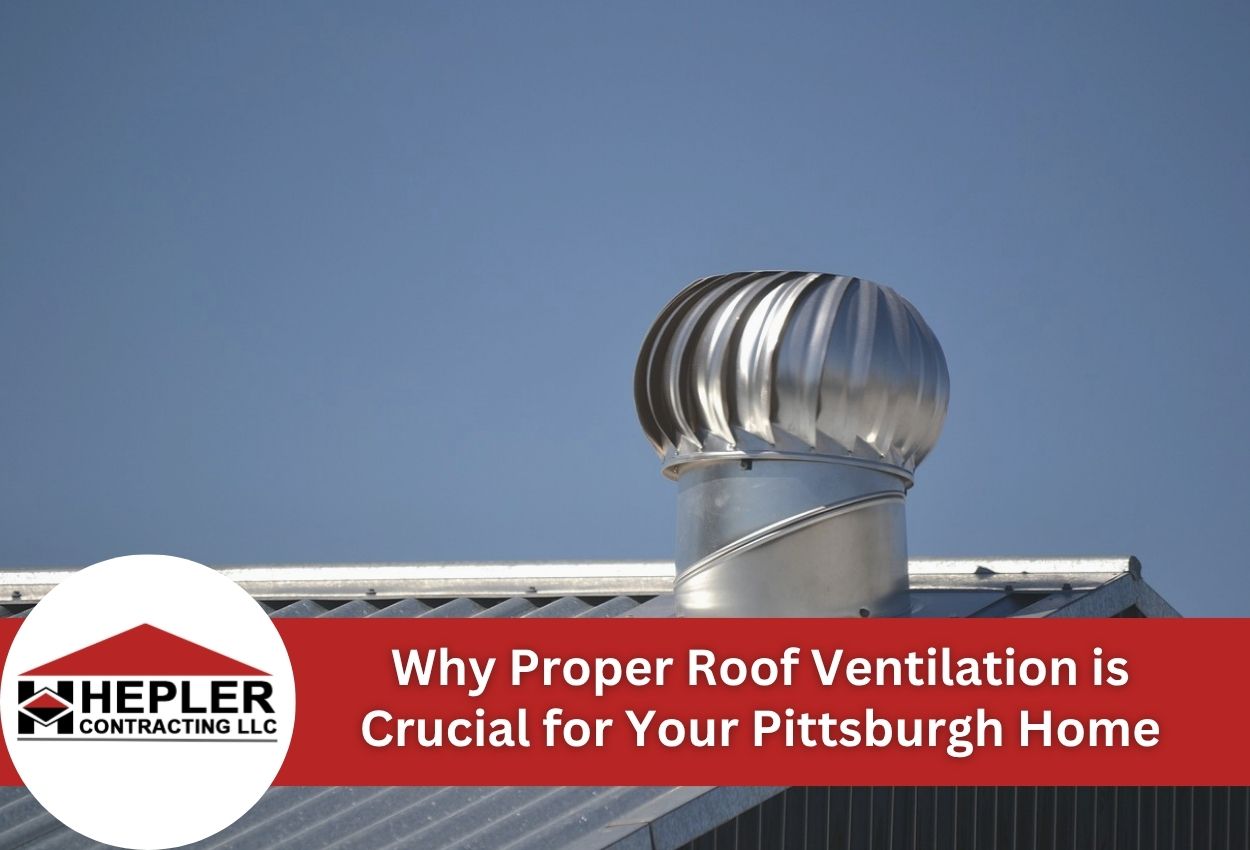
Once you’ve determined your total ventilation requirements, it is time to select the appropriate vent types. Each vent style offers different NFVA ratings that directly impact your calculations. Ridge vents typically provide 12 to 18 square inches of NFVA per linear foot and create excellent exhaust ventilation along the entire roof peak. For Pittsburgh homes with longer ridgelines, these vents often provide the most efficient exhaust solution.
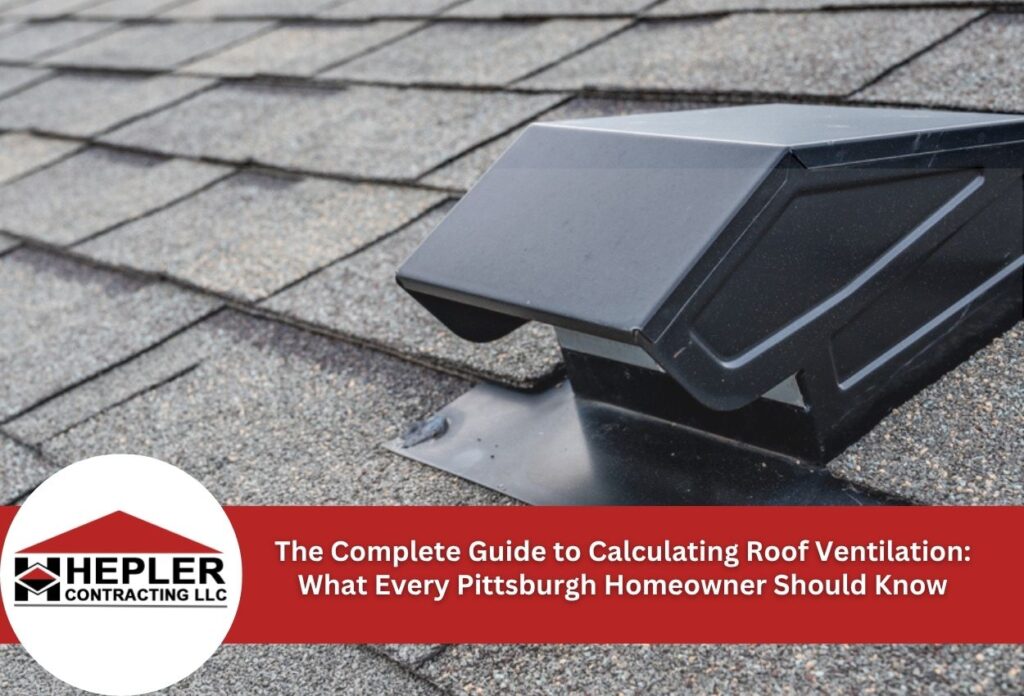
Box vents offer approximately 50 to 75 square inches of NFVA per unit and work well on homes with limited ridge space or as supplemental exhaust. Soffit vents come in continuous designs that provide 9 to 13 square inches NFVA per linear foot or individual designs that typically provide 4 to 8 square inches each. Gable vents provide around the same NFVA as ridge vents, but should not be combined with other vents.
To determine the number of each vent type needed, divide your required ventilation area by the NFVA of each product. For example, if you need 4 square feet (576 square inches) of exhaust ventilation, you would need approximately 8 to 10 standard box vents or 32 to 48 inches of ridge vent. Many Pittsburgh homeowners find that a combination of ridge vents and soffit vents creates the most effective year-round protection against our region’s temperature extremes and precipitation patterns. Always check manufacturer specifications for exact NFVA ratings when choosing vents for your home.
Implementing Your Ventilation Plan for Pittsburgh’s Climate
After calculating your roof ventilation requirements, implementation is the next step for Pittsburgh homeowners. Start by mapping vent placement on your roof diagram, ensuring exhaust vents are positioned at the highest points to maximize the stack effect. For ridge vents, installation along the entire ridgeline provides optimal exhaust, while soffit vents should be evenly distributed along eaves to ensure balanced intake.
Seasonal maintenance is essential for keeping your ventilation system performing optimally. Each spring, inspect and clear soffit vents of debris, pollen, and insect nests that accumulated over winter. Before winter arrives, ensure ridge vents and other exhaust points remain unobstructed, as snow buildup can block airflow when it’s most needed to prevent ice dams. During fall, pay special attention to clearing debris from intake vents, as clogged soffits can nullify even the most carefully calculated ventilation system.
Consider installing vent baffles between rafters to maintain clear airflow channels from soffits to the ridge, especially important in Pittsburgh’s older homes where insulation might otherwise block crucial intake paths. Your ventilation system works as a complete circuit — each component must remain functional for the entire system to protect your home throughout the year.
Expert Roof Ventilation Solutions in Pittsburgh
Understanding how to calculate roof ventilation requirements is crucial for maintaining your home. Whether you’re dealing with the sweltering heat of summer or the harsh cold of Pittsburgh winters, attic ventilation is key to preventing moisture buildup and ensuring a comfortable living environment.
At Hepler Contracting LLC, we specialize in optimizing roof ventilation to meet the needs of each Pittsburgh home. Using the 1:300 ventilation ratio rule, we help you calculate the exact amount of ventilation needed, balancing intake and exhaust to create the ideal airflow throughout your attic space.
Don’t let inadequate ventilation lead to high energy bills and roof repairs. Call us today at (412) 694-8785 to schedule a roof ventilation assessment. Ensure your home is protected year-round with the right ventilation strategy.